
The Beef
Why Is Hanwoo Expensive? What You're Actually Paying For
19 September 2026 · 3 min read
Premium beef prices can look steep next to a supermarket steak, and it's fair to ask what the difference actually is. The answer isn't marketing. It comes down to how the animal is raised, how the meat is graded and handled, and what a restaurant does with it before it reaches your table.
Time, Not Just Genetics
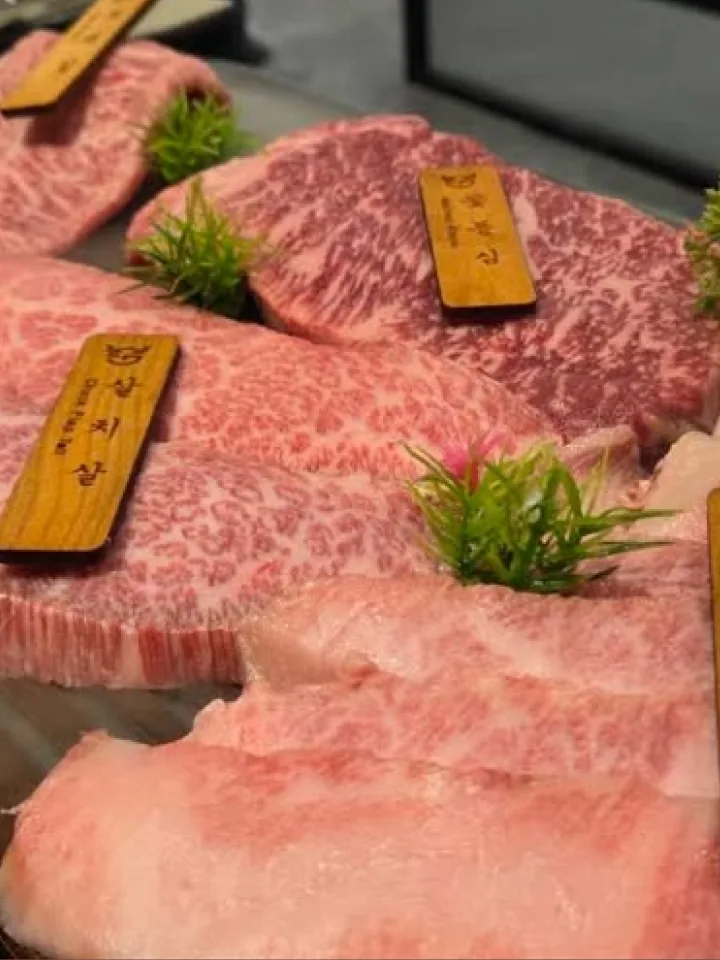
Hanwoo (authentic Korean native beef) is a specific breed known for developing fine, even marbling, but genetics alone doesn't produce a premium cut. Cattle raised for top-grade Hanwoo are typically fed and finished over a long period, often close to 30 months, considerably longer than many commercial beef operations aim for. Every extra month is feed cost, labour, and land tied up in a single animal, and it directly shapes how much intramuscular fat develops before slaughter.
Grading Rewards a Small Percentage of Every Animal
Hanwoo, like other beef traditions with formal grading, is assessed on marbling, colour, texture, and fat quality, and only a portion of any given animal earns the top grades. A whole animal yields cuts across a wide quality spectrum, from richly marbled loin cuts to leaner, tougher ones, and the top-graded portion is a minority of the total carcass. Pricing a premium cut reflects that scarcity: you are paying for the best part of a small percentage of animals that qualify at all.
The Cut Itself Matters
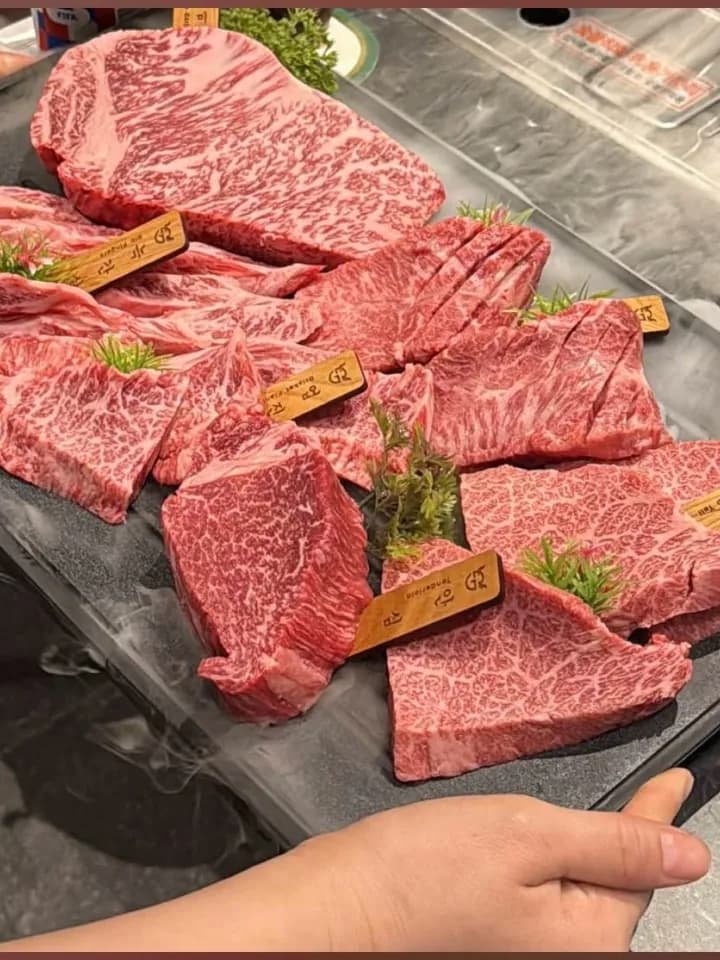
Even within a single animal, cuts vary enormously in how much usable, well-marbled meat they yield relative to their size. A ribeye or striploin comes from a muscle that naturally marbles well and requires careful, skilled butchery to portion correctly. A smaller cut like tenderloin is prized for tenderness but yields far less per animal. This is why cuts within the same tier are priced differently by weight rather than sold at one flat rate: the muscle itself, not just the grade, drives cost.
What the Restaurant Adds on Top
Beyond the animal and the cut, how a restaurant handles beef after it arrives adds real cost. Keeping cuts in a chilled display cabinet rather than a back-of-house freezer, cutting to order at a butcher's counter rather than pre-portioning in bulk, and grilling over live charcoal that needs constant tending rather than a gas burner, all cost more in labour, equipment, and waste than the cheaper alternatives. None of it changes the taste of a poor cut, but it protects the quality of a good one all the way to the grill.
Distance Adds Its Own Cost
For a restaurant outside Korea, there's another layer on top of everything the animal and the cut already cost: getting genuine Hanwoo to a market like Kuala Lumpur at all. Importing premium beef internationally means cold-chain logistics, customs handling, and the same freshness safeguards a domestic buyer needs, stretched over a much longer supply route. None of that shows up on the plate as a visible feature, but it's a real part of why a menu built around imported premium Hanwoo prices differently from one sourcing local beef.
Paying for What You Can Verify
The honest way to think about a premium beef price is that it compounds several real costs: a longer-raised animal, a small top-graded share of that animal, a labour-intensive cut, and a kitchen built to protect it rather than simply store it. None of that is invisible if you know where to look, in the marbling on the plate, in the crust from real charcoal, in a menu that prices cuts individually rather than flattening them into one number.
GOSANCHON's menu lists each cut and weight individually because the cost genuinely varies by cut. The menu is the clearest place to see how it breaks down.