
The Beef
How Much Beef to Order Per Person at Korean BBQ
19 September 2026 · 3 min read
One of the most common questions at a beef-focused Korean BBQ restaurant is also the simplest: how much should we order? Too little and the meal feels rushed toward a second round nobody planned for; too much and good beef goes cold on the grill. There's a reasonable way to think about it.
A Starting Rule of Thumb
For a full Korean BBQ dinner where beef is the centre of the meal, a common working estimate is roughly 200 to 300 grams of beef per person, before side dishes and rice are factored in. That range assumes beef is the main event, eaten alongside banchan (the shared side dishes) and wrapped in ssam (lettuce or perilla leaf wraps), not a light add-on to a bigger spread. Lighter eaters or tables ordering several other dishes can comfortably go lower; a table treating the beef as the whole meal often goes higher.
Why Cut Changes the Math
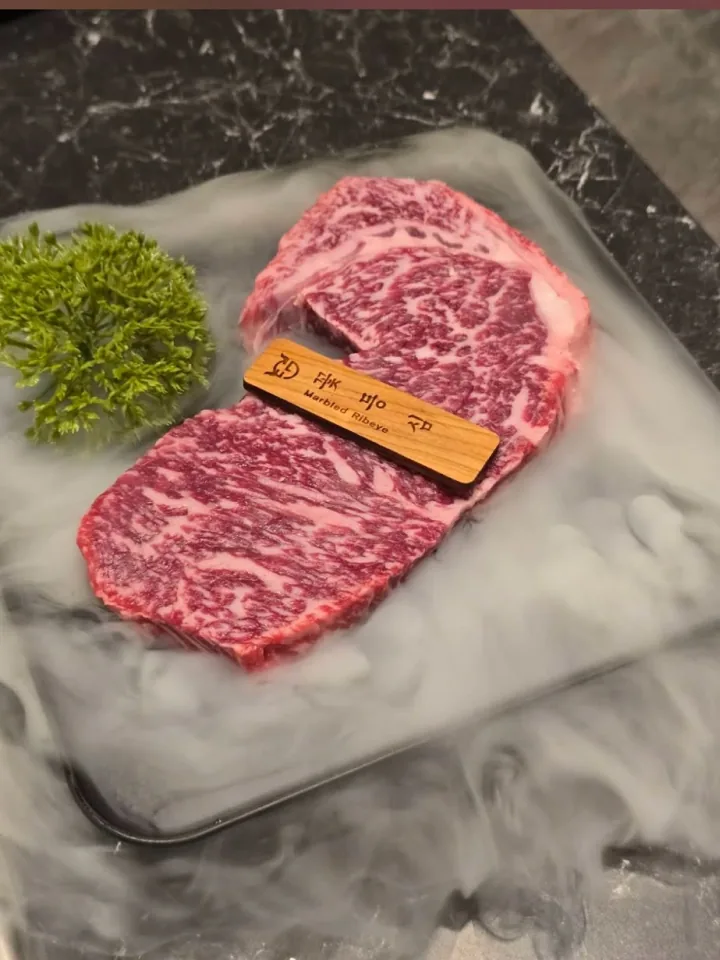
Not all beef fills the same way. Richly marbled cuts like ribeye or striploin are dense with rendered fat and satisfy in smaller quantities than leaner cuts. A table ordering mostly premium marbled cuts can often order toward the lower end of the range per person and still feel full, where a table built around leaner cuts may want to lean higher. This is one of the practical reasons cuts are priced and portioned individually rather than sold as one flat "meat platter": 100 grams of a fatty cut and 100 grams of a lean one land very differently on an appetite.
Order in Rounds, Not All at Once
The better approach for group sizing isn't estimating a total up front and ordering it all at once. It's starting with one or two cuts per two to three people, watching the table's pace, and reordering as it goes. This keeps beef arriving at the freshest possible moment, since it's often cut to order rather than pre-portioned, and it lets a table adjust upward or downward as appetite becomes clear, which is more accurate than any formula.
Banchan and Rice Change the Math
Any per-person estimate assumes beef is being eaten the way it's meant to be, alongside banchan (the shared side dishes) and often rice, not on its own. A table that orders generously from the side dishes and treats rice as part of the meal will naturally need less beef per person than one skipping both. This is worth factoring in before assuming a table under-ordered; sometimes an appetite that feels satisfied on paper's low end is genuinely full once everything else on the table is accounted for.
Sizing for Larger Groups
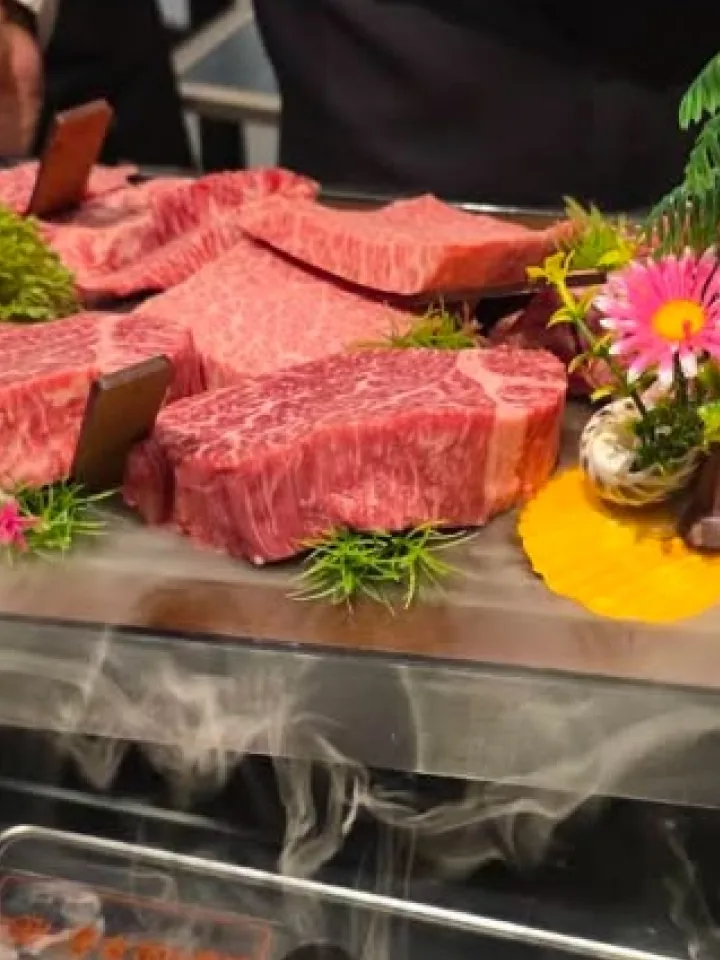
Larger groups don't scale linearly. A table of eight rarely needs quadruple what a table of two needs, because banchan, rice, and conversation naturally slow the pace and variety does more of the work. For bigger parties, ordering a wider spread of cuts, a couple of premium marbled options alongside smaller-format cuts, tends to satisfy more people than doubling down on one cut in bulk. This is also where a private dining setting helps, since a larger group can pace a shared order across a longer meal without crowding a small table.
When in Doubt, Ask the Table Serving You
Staff who work the floor of a beef-focused restaurant see this question every night and can read a table's pace faster than any general guideline. Telling your server how many are eating, how hungry the table is, and whether beef is the whole meal or one part of it usually gets a more accurate suggestion than doing the maths yourself.
GOSANCHON's cuts are listed by weight so a table can size an order precisely, and for larger groups, private dining gives the room to order in comfortable rounds.