
The Table
Korean BBQ Dipping Sauces: Ssamjang, Gireumjang and More
19 September 2026 · 3 min read
A Korean BBQ table usually comes with two or three small dishes of sauce that get far less attention than the meat itself, but choosing the right one for a cut changes the bite more than most diners realise. None of them are meant to mask the beef; each is built to do a specific, narrow job.
Ssamjang: The All-Purpose Base
Ssamjang, literally "wrapping sauce," is a thick, savoury paste typically built from doenjang (fermented soybean paste) and gochujang (fermented chilli paste), often rounded out with sesame oil, garlic, and a little sweetness. It's the closest thing to a default at a Korean BBQ table: deep, salty, slightly spicy, and strong enough to stand up to fattier cuts without disappearing. Because it's assertive, a small amount goes further than it looks, and it's most at home with leaner or more heavily seasoned cuts that can carry its intensity.
Gireumjang: Letting the Beef Speak
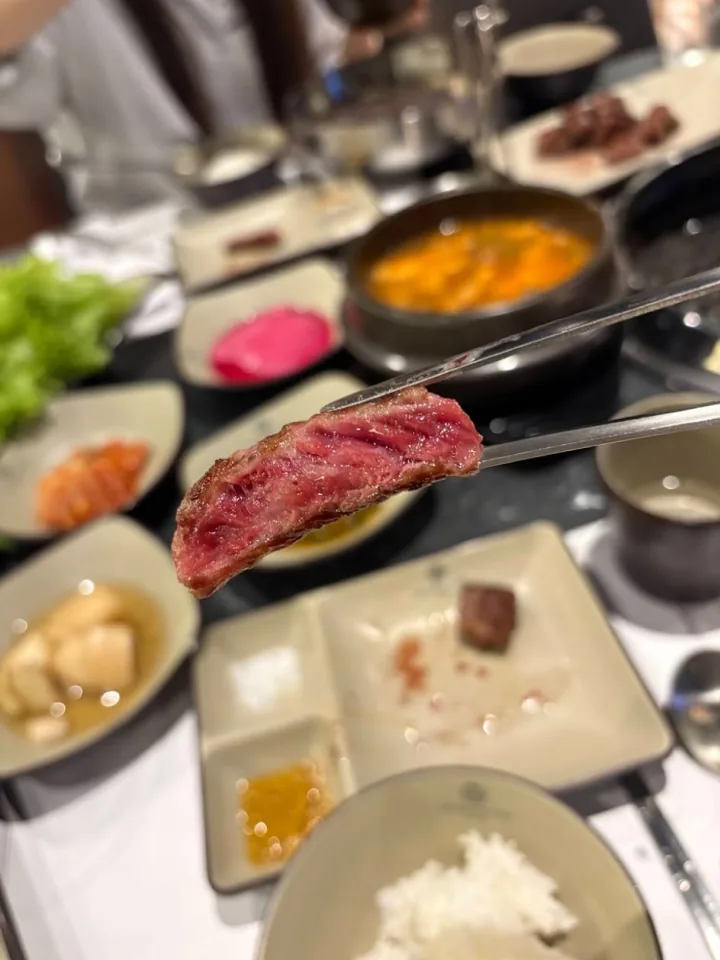
Gireumjang is far simpler: sesame oil mixed with salt, sometimes with a few cracked black pepper flakes. Where ssamjang adds flavour, gireumjang mostly adds aroma and a light savoury edge, without covering up what's underneath. This is the dip of choice for a genuinely premium, well-marbled cut like ribeye or striploin, where the point of the meal is tasting the beef itself. A quick touch of gireumjang seasons the surface without competing with the marbling that's already doing the work.
Salt on Its Own
Sometimes the simplest option is no sauce at all, just a light dusting of salt, occasionally at the table alongside gireumjang rather than replacing it. This is less a separate sauce than a philosophy: the richer and better marbled the cut, the less it benefits from added flavour, and a truly good piece of Hanwoo (authentic Korean native beef) is often best served by staying out of its own way.
Other Common Additions
Beyond the two core dips, a Korean BBQ table often has smaller accompaniments that function like sauces without being one: a scattering of thinly sliced raw garlic and green chilli to add sharpness, sliced chilli in soy for a brighter, more acidic note, and occasionally a wasabi and soy mix borrowed from Japanese tradition for cuts that benefit from a sharper contrast. None of these are essential, but they're worth trying individually before mixing several together, since it's easy to build a bite so layered that the beef itself gets lost.
How Much Is Too Much
Because these dips sit in small shared dishes at the centre of the table, it's worth dipping lightly on a first pass rather than loading a piece of beef the way you might coat a spoonful of rice. A thin touch of ssamjang or a light dip in gireumjang seasons the surface of a piece of meat without soaking it, which matters because a heavily coated bite can end up tasting mostly of the sauce rather than the beef underneath it, no matter how good the cut. If a bite needs more, it's easy to dip again.
Matching Sauce to Cut
The general logic across all of it is straightforward: the richer and more marbled the cut, the lighter the sauce should be, moving toward gireumjang or plain salt. The leaner or more assertively seasoned the cut, such as a marinated option, the more it can carry ssamjang's depth without becoming muddled. Rather than defaulting to one sauce for the whole meal, trying a bite of the same cut with two different dips is the fastest way to understand what each one is actually doing.
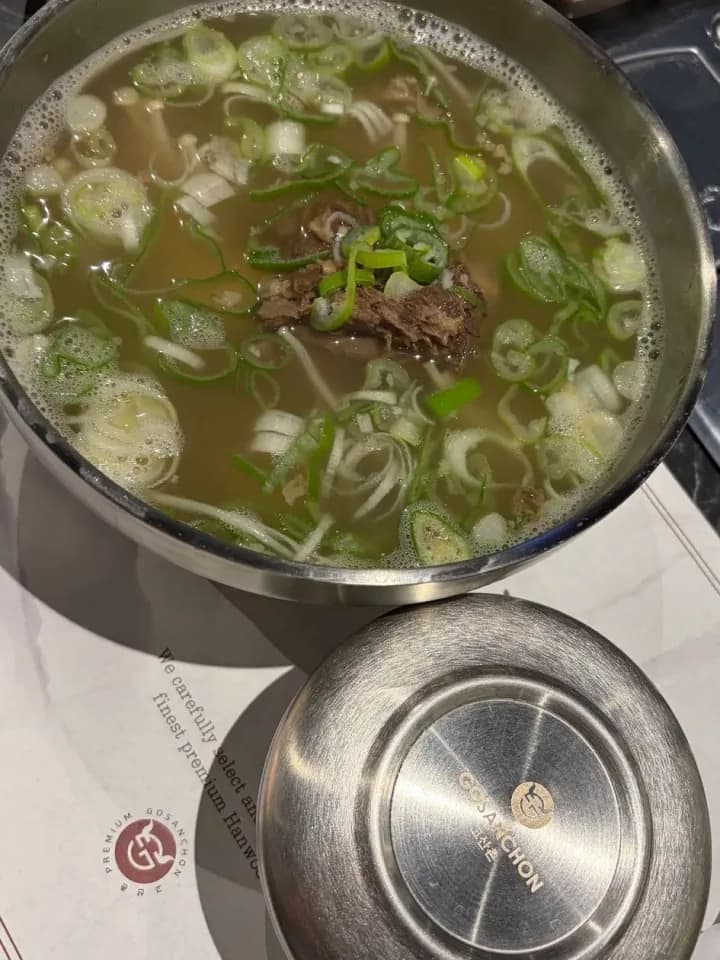
GOSANCHON's table setting includes the sauces suited to premium marbled cuts alongside the leaner and marinated options on the menu, so each pairing is easy to try side by side.