
The Beef
Why Hanwoo Is Rare Outside Korea, and What It Takes to Serve It in KL
19 September 2026 · 3 min read
Scarcity that starts with supply, not marketing
Genuine Hanwoo is difficult to find outside Korea for reasons that start well before any restaurant gets involved. Korea's domestic market consumes the large majority of what the country produces each year, and the breed is treated as a protected national agricultural resource rather than a crop grown primarily for export. Export volumes exist, but they're a small fraction of overall production, competing against strong domestic demand and, historically, against animal health and trade regulations that have restricted or slowed the movement of Korean beef across certain borders at various points. On top of that, Korea's own domestic price for top-grade Hanwoo already runs well above commodity beef, which limits how competitively it can be priced once shipping, import duties, and handling costs are added on for a foreign market.
The logistics of moving a graded carcass
Even where export is possible, Hanwoo doesn't travel the way a shelf-stable commodity does. Grading happens carcass by carcass in Korea under a national inspection system, and preserving that grade and condition through the journey - chilled, not frozen, in most cases where quality matters most - requires an unbroken cold chain from the Korean processor to the destination restaurant. Freezing changes texture and is generally avoided for the cuts where marbling quality is the whole point. That means shipping windows, customs clearance, and import handling all have to work reliably, with far less margin for delay than a frozen product would allow. Every additional day in transit is a day the meat isn't ageing under controlled conditions either, which matters for a product where the last stretch of handling can make as much difference to the final result as the grade printed on the carcass.
Why "Korean beef" abroad usually isn't Hanwoo
Given all of that, most of what gets marketed as "Korean beef" outside Korea isn't Hanwoo at all. It's frequently a different breed of cattle, raised locally or imported from elsewhere, served with Korean seasoning, side dishes, and tabletop grilling to recreate the experience without the breed itself. That can still be enjoyable food, but it's a different product wearing a familiar name, and it's part of why genuine Hanwoo abroad tends to be rare enough that restaurants that serve it usually say so explicitly. For a diner, the simplest way to tell the difference is to ask directly whether the beef is Hanwoo by breed rather than assuming a menu's Korean framing settles the question.
What it actually takes to serve it in Kuala Lumpur
Serving real Hanwoo in Malaysia means sourcing genuinely graded carcasses, maintaining the cold chain through import, and handling the meat in a way that doesn't waste what made it worth importing in the first place. That's the reasoning behind cutting to order rather than pre-portioning everything in advance: a whole piece displayed in a chilled cabinet and cut only once a table orders it loses less quality between import and plate than meat that's been portioned, wrapped, and stored days ahead. It also means the restaurant's own butcher, not a distant packing line, makes the final call on how a given piece is separated into cuts, which matters when the whole point of importing it was to preserve what made it worth the trip in the first place.
Seeing it done properly
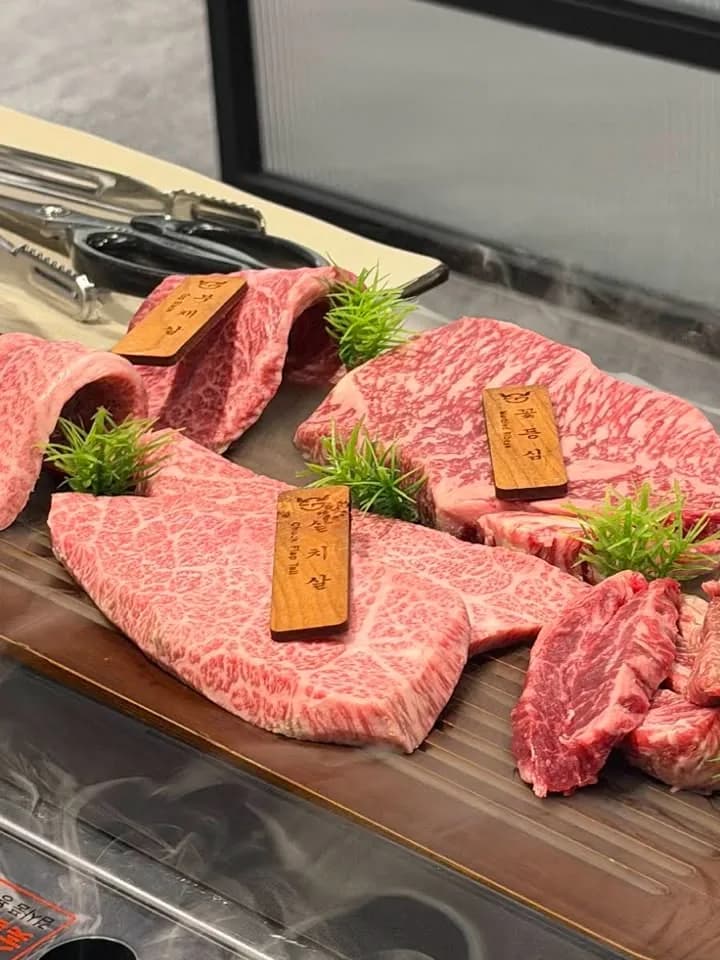
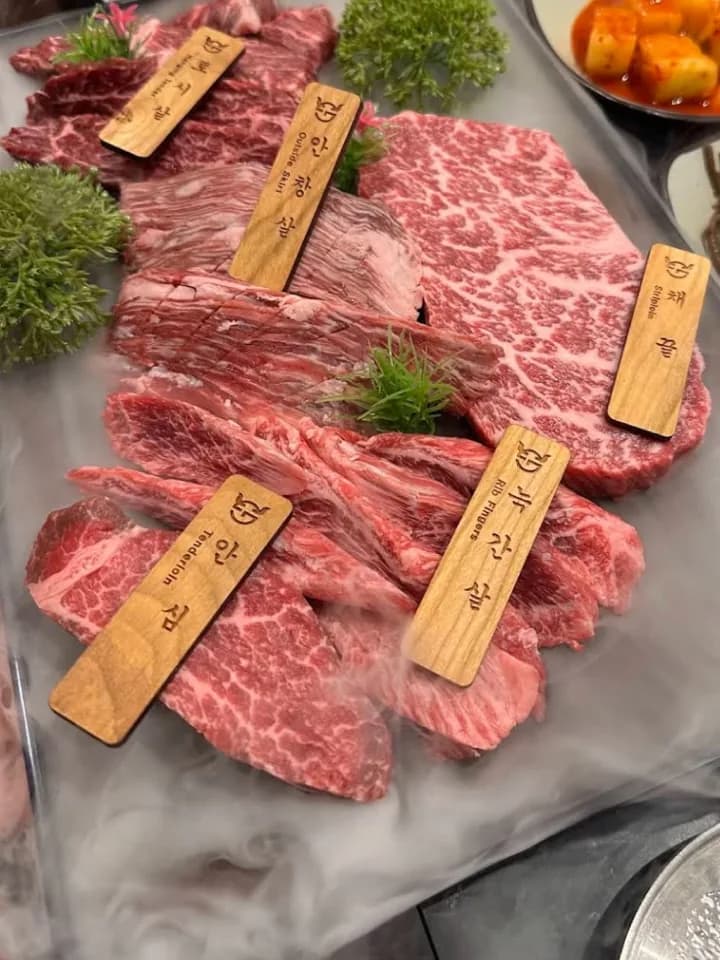
That's the approach GOSANCHON takes at MET Galleria in Met1 Metropolis - Hanwoo displayed whole in a chilled cabinet and cut to order at a butcher's counter, so the rarity of the breed is matched by the care taken with the last few minutes before it reaches the grill. Visiting has the details if you'd like to see the counter for yourself.