
The Fire
The Grilling Technique Behind a Proper Charcoal Hanwoo Course
19 September 2026 · 3 min read
Live charcoal gets most of the credit for good Korean BBQ, and it deserves it. But coals alone don't grill anything. What happens between the fire and the plate, the sequence of moves a grill master or an attentive table makes, is what separates a course that shows off marbled Hanwoo and one that just cooks it. Two tables with identical charcoal and identical beef can still end up with very different results depending on who is tending the grill.
Reading the Fire Before the Meat Touches It
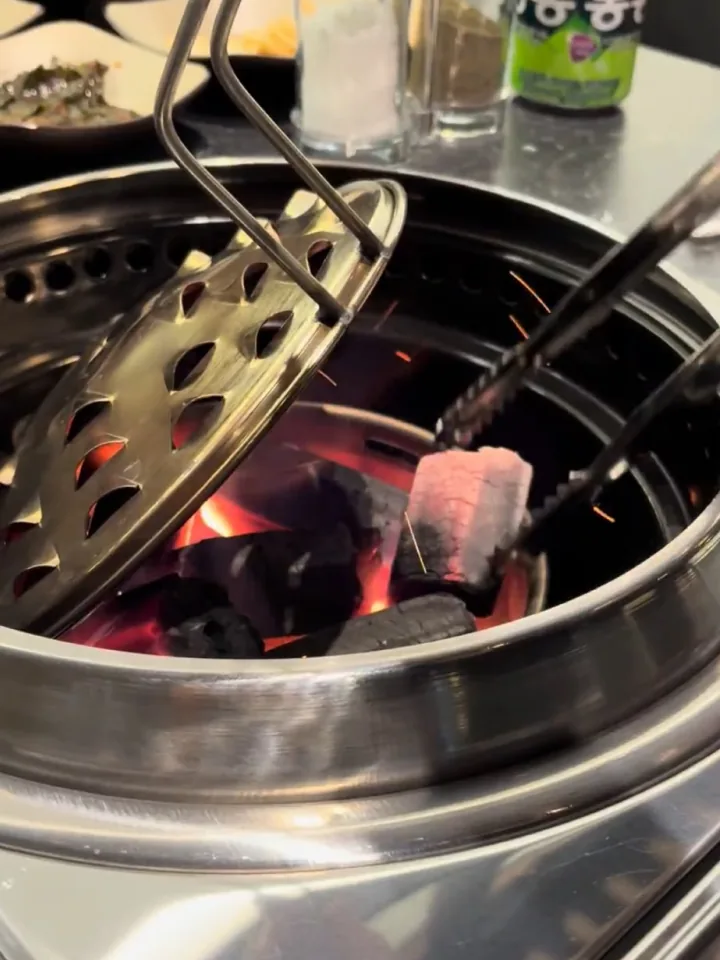
Good technique starts before anything hits the grate. Coals need to be glowing and lightly ashed over, not raw black lumps that haven't built even heat, and not tired grey embers losing their strength. A skilled hand checks the fire the way a cook checks an oven, adjusting coal placement to build a genuinely hot zone rather than trusting that heat is evenly spread just because coals are lit. This first read of the fire sets the ceiling for everything that follows.
Searing First, Always
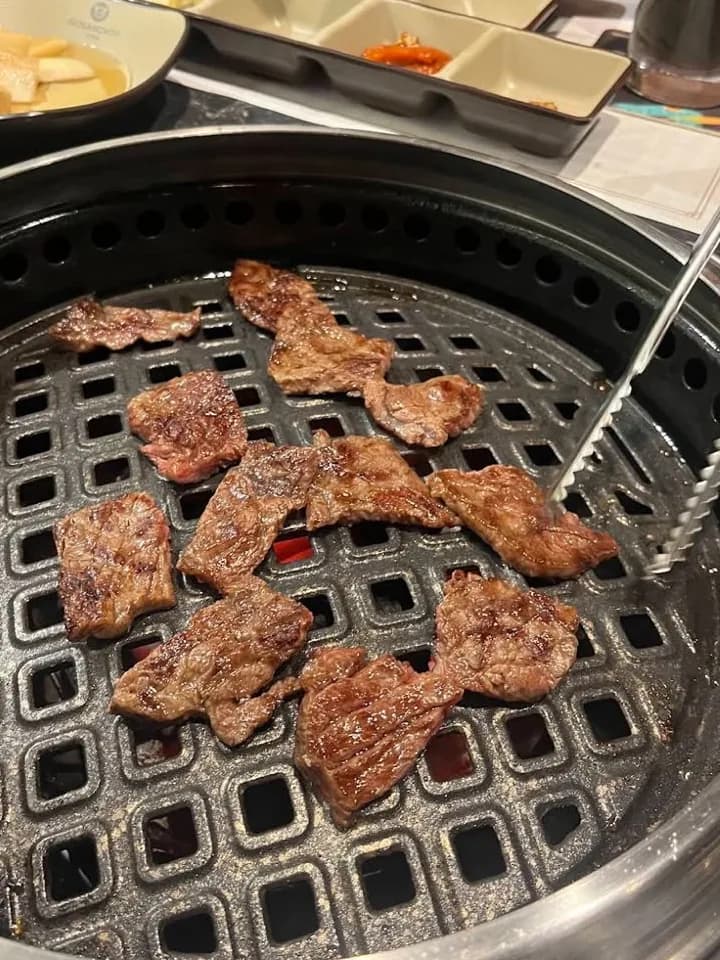
The first move on any cut, thin or thick, is a hard sear. This is not about colour alone. A fast, high-heat sear seals the surface and starts the Maillard reaction, the browning that builds most of what people describe as "grilled" flavour, before the interior has had time to overcook. Cuts placed on a lukewarm grill and left to slowly come up to temperature never develop that crust properly. They steam more than they sear, which is exactly the damp, muted result charcoal is supposed to avoid in the first place.
One Turn, Not Ten
A cut that gets flipped repeatedly never builds a real crust anywhere, because each flip interrupts the browning before it finishes. Good technique means one confident turn per cut, sometimes two for a thicker steak, rather than constant fidgeting. This also protects the interior: every flip is a chance to lose the internal warmth building steadily toward the right doneness, and a beef course that gets turned too often ends up unevenly cooked, seared in patches rather than as a whole surface.
Using the Whole Grill, Not Just the Middle
A charcoal grill isn't one uniform surface. The centre, directly over the densest coals, is for searing. The edges, cooler and less direct, are for resting a piece that has already coloured but needs another minute before the centre catches up. Moving a cut outward once it's seared, rather than leaving it in the hottest zone until it's fully cooked through, is what keeps a well-marbled cut from crossing from medium-rare into grey in the space of a few extra seconds. Treating the grill as having only one temperature is one of the most common mistakes at an untended table.
Tending the Fire Mid-Meal
A grill that has cooked through several rounds of fat-rich cuts accumulates residue, and burnt fat tastes bitter rather than smoky. Part of the technique is knowing when to swap the grate or clear it, so the next cut sears against a clean, hot surface instead of picking up char from what came before. This is easy to miss as a diner, but it's one of the clearest signs of a kitchen that takes the fire seriously, and it matters just as much late in a meal as it does at the start, when fatigue makes it tempting to let a grate go one round too many before swapping it.
Every table at GOSANCHON grills over live charcoal with exactly this kind of attention paid to it course by course. The experience covers what that looks like from the moment a table sits down.