
The Fire
Charcoal vs Gas vs Electric: What Changes on the Plate
19 September 2026 · 3 min read
Walk into enough Korean BBQ restaurants and you'll find all three heat sources in active use: charcoal, gas, and electric. Each one grills, in the loose sense that it applies heat to meat. But the kind of heat, and what that heat does to marbled beef specifically, is different enough that the choice shapes the entire meal, from the crust on the surface to how forgiving the cooking process is for the person tending it.
How Each Heat Source Actually Works
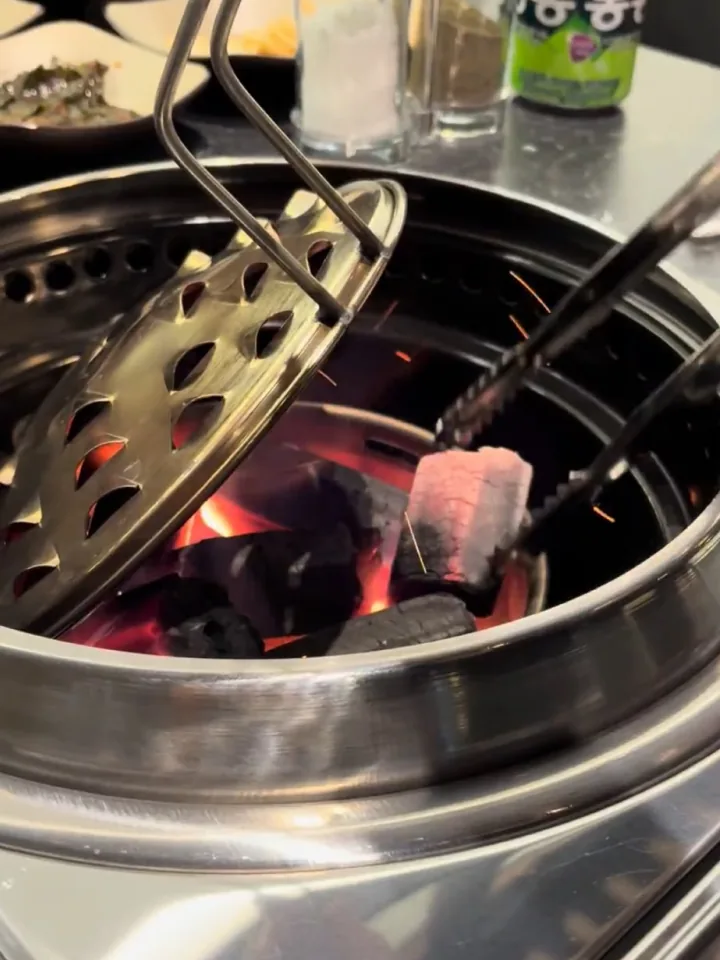
Charcoal cooks primarily through radiant heat: infrared energy from glowing coals striking the meat's surface directly. Gas burns cleaner but produces water vapour as a byproduct of combustion, which keeps the air around the grill slightly humid. Electric grills, usually a heated metal or stone plate, transfer heat through direct contact rather than radiant energy or open flame, cooking more like a pan than a fire. All three reach similar surface temperatures at their hottest, but the way heat actually arrives at the meat is genuinely different in each case.
What That Means for Crust and Moisture
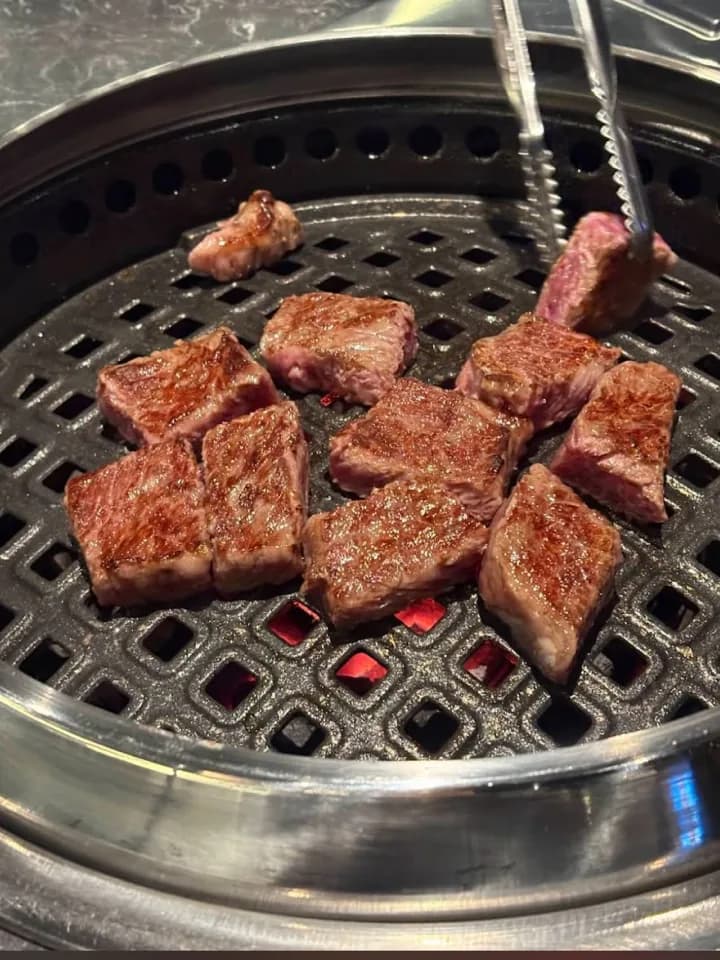
Radiant, dry heat from charcoal dries and browns the meat's surface quickly while the centre stays comparatively cool, building a real crust in the process. Gas's slightly damp cooking environment makes that same crust slower to form, since some of the grill's energy is spent dealing with ambient moisture rather than browning the surface. Electric plates sear efficiently through direct contact but cook more evenly across the whole surface at once, which can mean less contrast between a deeply browned crust and a rare centre.
Practicality Pulls the Other Way
None of this makes charcoal simply "better" in every sense. It is more work in every practical respect: coals need lighting, tending, and regular replacing, and a charcoal grill demands stronger ventilation than gas or electric. Gas lights instantly and holds a steady temperature with a dial. Electric is the easiest to clean and the least demanding to maintain table to table. Restaurants that choose gas or electric are usually optimising for consistency, cost, or simplicity, not making a mistake, and for leaner, less marbled beef the difference matters far less.
Why Marbled Beef Specifically Rewards Charcoal
The case for charcoal gets stronger the richer the beef. A well-marbled Hanwoo cut is a balancing act: render too little of the fat and the bite is waxy, render too much and the meat dries out along with it. Charcoal's fierce, brief surface heat crisps the exterior and softens the interior marbling quickly, without holding the meat at temperature long enough to cook it through evenly. That speed matters more with rich cuts than lean ones, which is why charcoal is the standard at restaurants built specifically around premium marbled beef, even though it is the least convenient of the three options.
What to Watch For at the Table
Whichever heat source is in front of you, the tells are similar: is the surface actually hot, is it clean rather than carrying residue from the last table's cuts, and is the person tending it paying attention to timing rather than treating the grill as a passive backdrop. The heat source sets the ceiling. Technique still decides whether a table reaches it, which is why the same heat source can produce very different results from one restaurant to the next, and why a well-run gas or electric table can still outperform a neglected charcoal one.
GOSANCHON grills every table over live charcoal specifically for what it does to richly marbled Hanwoo. The experience explains how that fire is tended course by course.