
The Beef
Why Beef Grading Systems Differ by Country
19 September 2026 · 3 min read
Walk into a butcher's counter in Seoul, Tokyo, Chicago or Sydney and you'll see beef labeled with a completely different code: 1++, A5, USDA Prime, MSA 3-star. All four labels are trying to answer the same question — how good is this beef going to taste — but each grew out of a different national cattle industry, and none of them measure quite the same thing.
Korea: marbling first, then everything else
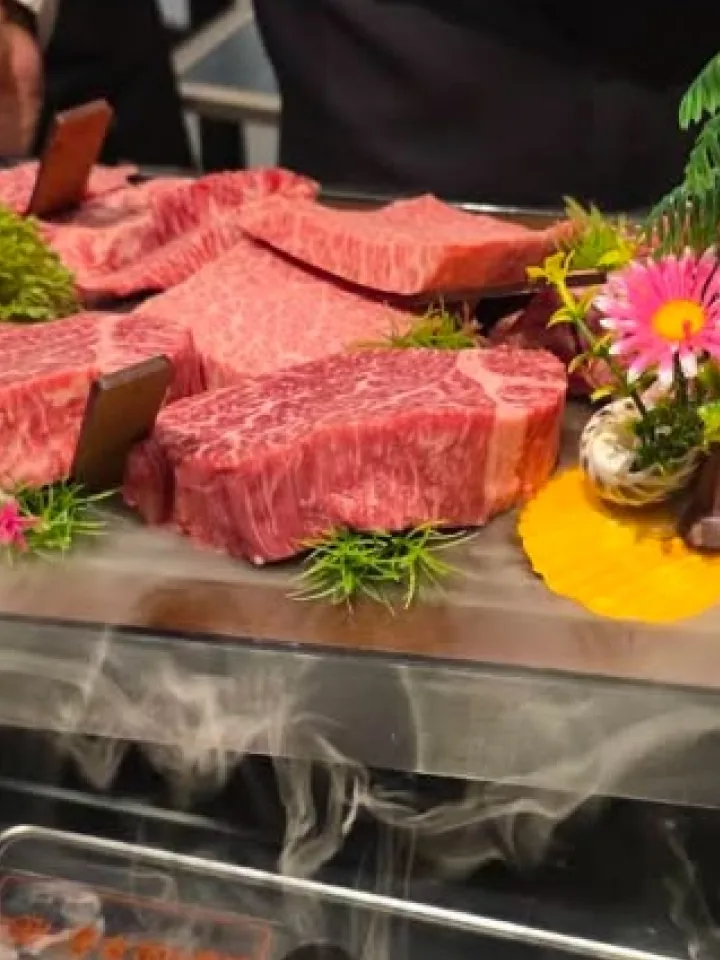
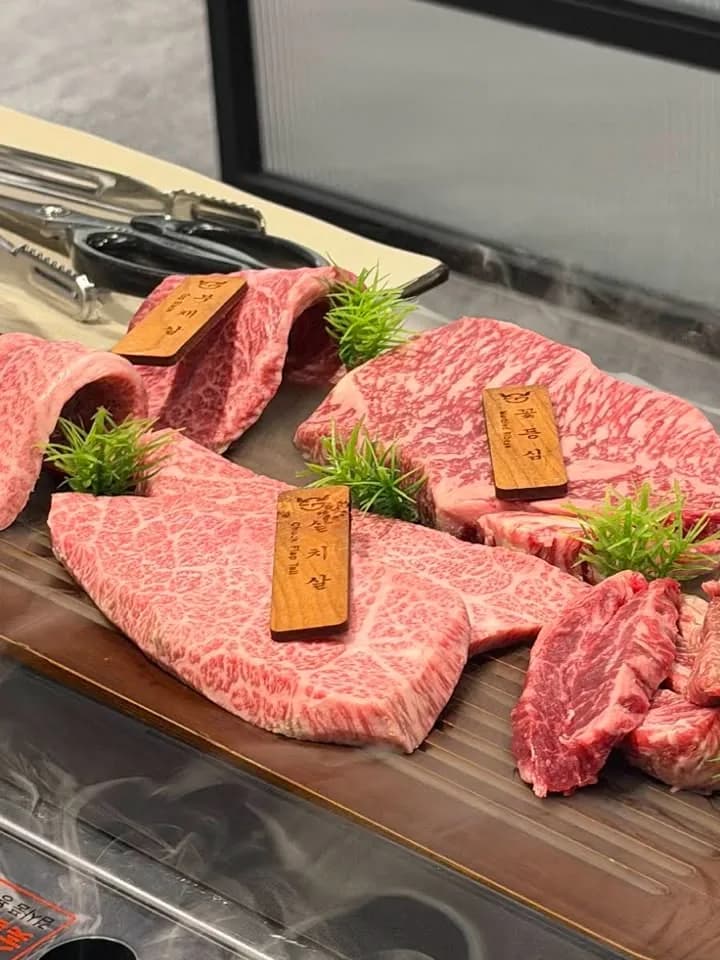
Korea's grading system, run by the Korea Institute for Animal Products Quality Evaluation, scores a carcass primarily on marbling (근내지방도, "intramuscular fat"), using a 1 to 9 scale checked against a visual reference standard. That marbling score, combined with meat colour, fat colour, texture and maturity, produces the quality grades most diners recognise: 1++, 1+, 1, 2 and 3. Hanwoo, Korea's native cattle breed, is raised specifically to marble heavily, so the grading system exists largely to measure how close an individual animal came to that genetic ceiling. A 1++ carcass has hit the top of a scale built around one breed.
Japan: a finer ruler for a similar goal
Japan's BMS (Beef Marbling Standard) looks similar in spirit. It also scores marbling on its own numbered scale, 1 to 12, but folds that into a letter-and-number grade — A5, B3, and so on — where the letter reflects yield (how much usable meat comes off the carcass) and the number reflects quality, of which marbling is the largest component. Wagyu genetics push marbling further than Hanwoo at the very top grades, which is part of why A5 can look almost lace-like inside the muscle.
The US and Australia: built for volume, not one breed
USDA grading (Prime, Choice, Select and below) also scores marbling, but against a cattle population that is genetically far more mixed and usually grain-finished for a shorter, more standardised period than Hanwoo or Wagyu. The scale is coarser because it has to work across many breeds and feeding regimes rather than a single national breed bred for the purpose.
Australia's MSA (Meat Standards Australia) system takes a different approach again. Rather than scoring the carcass alone, it predicts eating quality — tenderness, juiciness, flavour — with a model that factors in the specific cut, the cooking method, ageing time and even the animal's stress levels before slaughter, alongside AUS-MEAT marbling scores of 0 to 9. It is grading the eating experience as much as the meat itself.
Yield grade: a separate number entirely
It's also worth knowing that grading isn't only about marbling. Most systems, including Korea's, pair a quality grade with a separate yield grade, A, B or C, that measures how much saleable meat a carcass produces relative to its size, independent of how well it marbled. A carcass can rank highly on one and only moderately on the other. When a menu lists a quality grade alone, it's telling you about marbling and eating quality, not about how efficiently the animal was processed.
Why the comparison matters at the table
None of these systems convert directly into one another, which is why "1++", "A5" and "Prime" get used almost interchangeably in conversation when they are really answers to slightly different questions, measured on different rulers, from different cattle. What they share is the underlying principle: fat distributed through the muscle, not just around it, is what turns a good steak into a rich one.
Grading also explains why Hanwoo tastes distinct from Wagyu or grain-fed Angus even at a comparable marbling score. Breed, diet and the length of the finishing period all shape flavour and texture in ways a single number can't fully capture — grading tells you how marbled a cut is, not everything about how it will eat.
At GOSANCHON, every cut of Hanwoo served is graded under the Korean system, displayed in a chilled cabinet, and cut to order at the butcher's counter, so the marbling is visible before it ever reaches the charcoal. If you want to see what a top-grade Hanwoo carcass actually looks like on a plate, the menu is the place to start.