
The Beef
Hanwoo vs USDA Prime: Two Grading Systems That Don't Convert
19 September 2026 · 3 min read
Different cattle, different questions being asked
USDA Prime and a Hanwoo quality grade both aim to answer "how good is this beef," but they were built for different cattle, different farming systems, and different retail markets, which is why the two scores don't convert into each other despite both getting summarized as a simple top-tier label. USDA grading covers a wide range of American breeds and crossbreeds - predominantly Angus and Angus crosses - most of them grain-finished in large feedlots for a period before slaughter. Hanwoo grading applies to one specific native Korean breed, raised under a different feeding and finishing regime with its own timeline and standards. Even the purpose of each system differs at the outset: USDA grading was designed to standardize a large, geographically spread commodity market across many producers and breeds, while Hanwoo grading was designed around a single breed's known characteristics, evaluated against reference standards built specifically for it.
What Prime actually measures
The USDA system grades beef primarily on marbling and the maturity of the animal, sorting it into Prime, Choice, Select, and lower grades. Prime sits at the top, reserved for the small percentage of graded carcasses with the most abundant marbling, and it is what most steakhouses mean when they advertise their beef as top-tier. It is a single combined score, assessed against USDA's own marbling reference photographs and maturity indicators, without a separate yield-efficiency letter attached to the label consumers see. Below Prime, Choice covers the large middle of the American market and is what most everyday steakhouse and supermarket beef is graded, while Select and the grades beneath it describe progressively leaner carcasses more often used in cuts where marbling matters less to the finished dish.
What Hanwoo's grade adds that Prime doesn't
Hanwoo grading is a two-part system. The quality grade (1++ down to 3) covers marbling alongside meat color, fat color, and texture, evaluated against Korea's own reference standards, which were built around Hanwoo's particular marbling pattern rather than adapted from a system designed for other breeds. It's then paired with a separate A/B/C yield grade describing how efficiently the carcass converted into usable meat, a figure aimed at processors rather than diners. USDA Prime doesn't carry an equivalent yield indicator in the grade a customer sees, because that isn't the question the American system was built to answer for the public label. This also means the two systems put the yield information in different hands: in the American supply chain, that kind of carcass-efficiency data typically stays with the packer and processor, while Korea's A/B/C letter is designed to travel with the meat all the way to the point of sale.
Why "Prime" and "1++" aren't the same claim
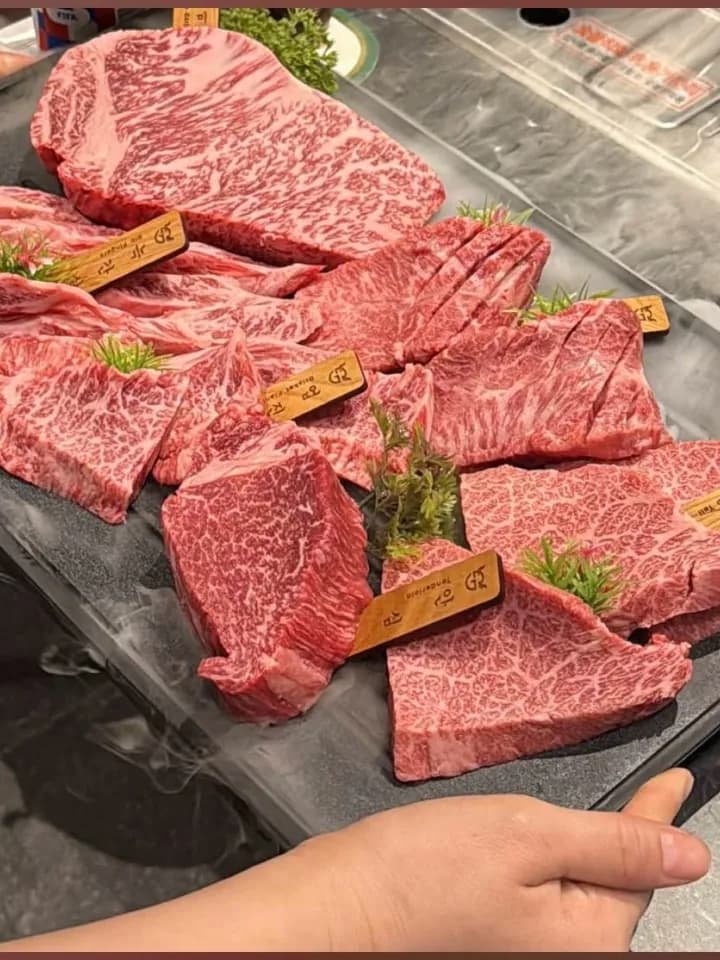
Because the marbling scales, reference photos, and even the genetics being measured differ, a USDA Prime ribeye and a 1++ Hanwoo ribeye can both be legitimately excellent while tasting quite different. Prime beef, especially from well-finished Angus, tends toward a firmer bite with marbling in visible flecks and streaks. Hanwoo's marbling is typically finer-grained and denser at the very top grades, with a fat that renders at a lower temperature, giving a softer yield on the palate. Treating "1++" as "Korea's Prime" undersells both systems - it's closer to two different exam boards each awarding their own version of a top mark, using different papers.
Judging it by eating it, not by label
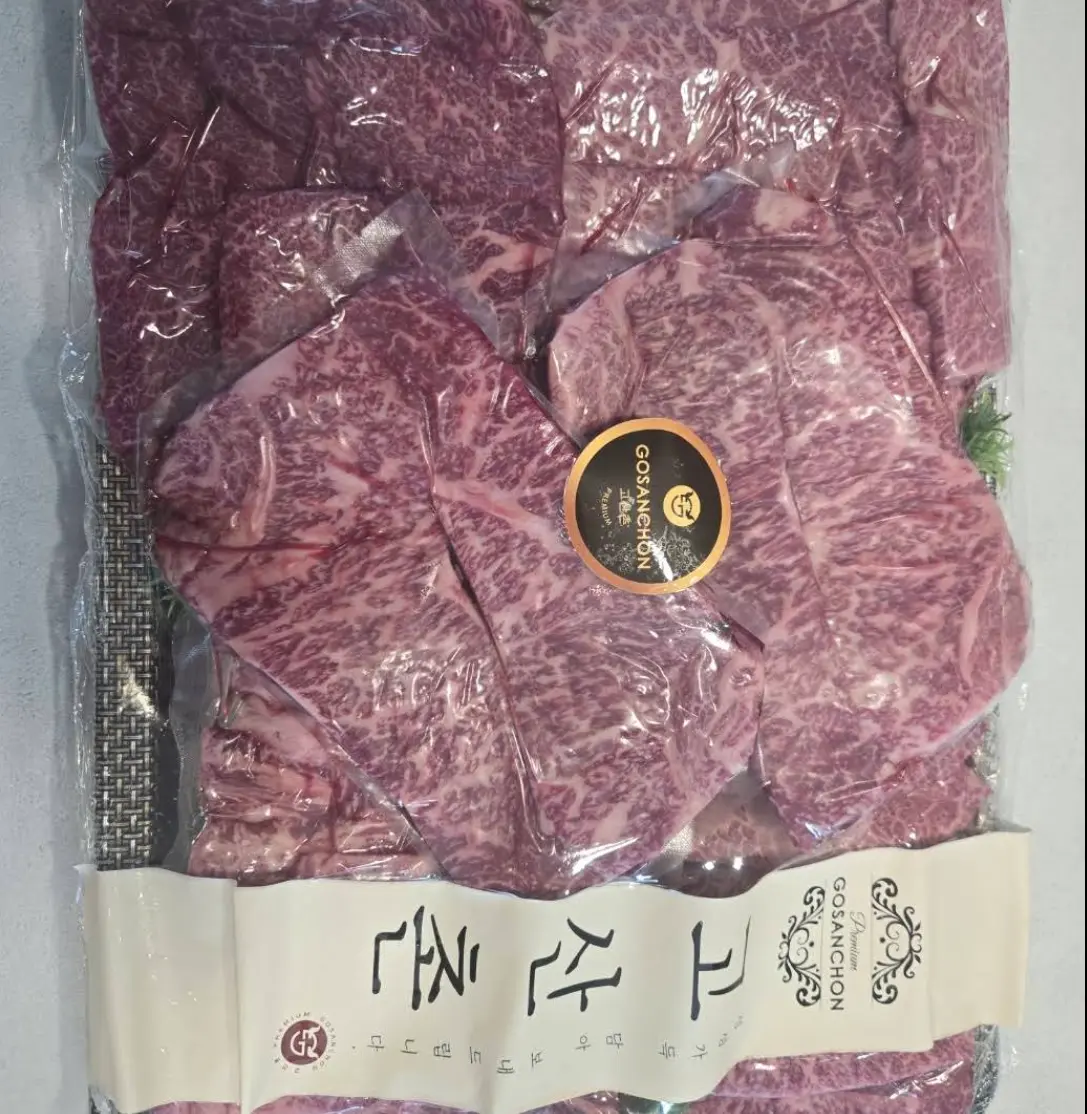
The most reliable way to understand the difference is to taste Hanwoo without trying to map it onto a USDA scale in your head. Every cut at GOSANCHON is genuine Hanwoo, displayed in a chilled cabinet and cut to order, so what you're evaluating is the breed and its grade on their own terms. The menu lists the available cuts and grades if you'd like to compare for yourself.