
The Cuts
Samgyeopsal vs Beef: Why a Beef-First BBQ Table Differs
19 September 2026 · 3 min read
Samgyeopsal, thick-cut pork belly grilled at the table, is often the first dish people picture when they hear "Korean BBQ." It is popular for good reason: it is affordable, forgiving to cook, and satisfying in a communal, help-yourself way. It is also pork, not beef, and that single fact changes almost everything else about the meal, from what is on the plate to how the table behaves around it.
Samgyeopsal Is Pork, Plainly
The name translates roughly to "three-layer flesh," describing the alternating bands of fat and meat in pork belly. It grills quickly, renders generously, and pairs naturally with ssamjang, the thick, savoury dipping paste, and a lettuce wrap. None of that is a criticism. It simply describes a different category of food from Hanwoo, Korea's native beef breed, which is what a beef-first table is built around. The two dishes come from different animals, different price points, and different traditions within Korean grilling culture, even though both happen under the same general banner of Korean BBQ.
What Changes When Beef Leads
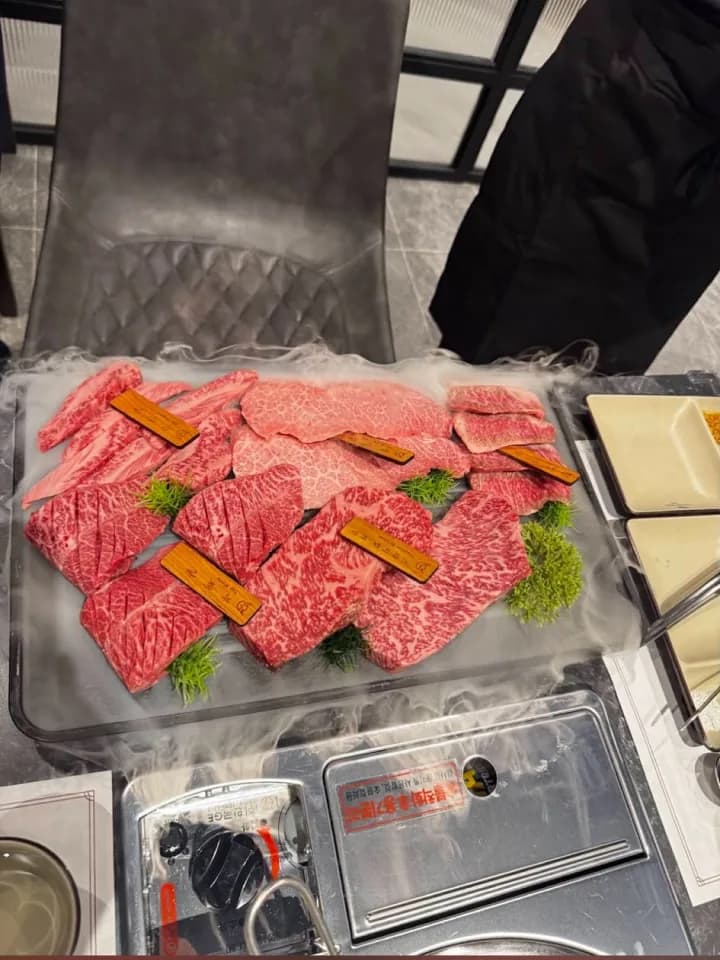
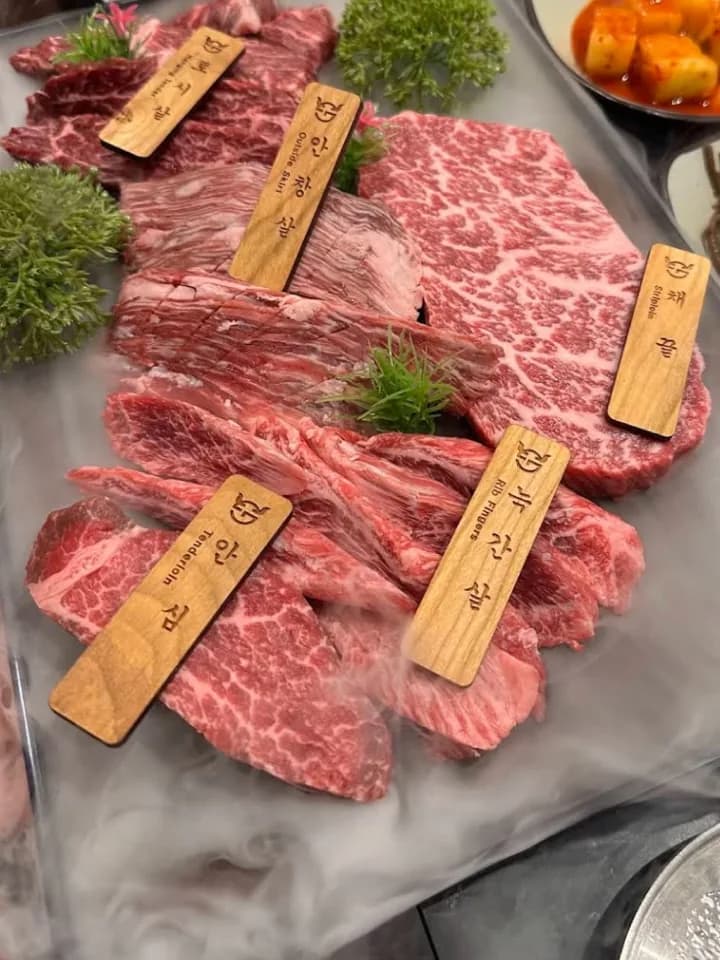
At a beef-first table, the centrepiece is not one cut cooked one way but a sequence of distinct muscles, each with its own texture and ideal grill time. A marbled ribeye behaves nothing like a lean tenderloin, and neither behaves like a thin-sliced brisket cut such as chadolbaegi. At GOSANCHON, that variety is visible before it is ever cooked: Hanwoo is kept in a chilled display cabinet and hand-cut to order at a butcher's counter, so what reaches the grill was portioned minutes earlier, not days. Watching that process, rather than being handed a pre-cut tray, is itself part of what separates a beef-first meal from a faster, more casual one.
Grading Enters the Conversation
Pork is rarely discussed in terms of marbling grade. Beef, especially Hanwoo, is graded specifically on how finely fat is distributed through the muscle, and that grade has a direct, tastable effect on the meat. It is common at a serious beef house to see the same cut offered at two grades, letting a table taste the difference side by side rather than take it on faith. That kind of comparison simply doesn't exist on a samgyeopsal menu, where the pork belly in front of you is the pork belly in front of you.
Smaller Portions, Slower Pace
Samgyeopsal is often eaten in volume, cut into pieces and shared freely across a long session. Premium beef cuts are typically served in smaller, weighed portions, seasoned with little more than salt, and eaten with more attention paid to each bite. The pacing of the meal changes because the meat itself asks for it. A well-marbled cut cooked past its point loses exactly what made it worth ordering, so tables tend to slow down, watch the grill, and eat as each piece finishes rather than all at once.
Two Different Nights Out
Neither style is better in the abstract. A samgyeopsal night is loud, cheap, and easy. A beef-first night is about tasting the difference between cuts, grades, and even the same muscle prepared two ways. Understanding which one you are walking into changes what you order, how quickly the meal moves, and how much attention you end up paying to any single piece of meat on the grill. It can also change who you bring along: a samgyeopsal table welcomes a big, noisy group without much planning, while a beef-first table often rewards a smaller party willing to slow down and compare cuts course by course.
If a beef-first table sounds like the one you want, the menu lays out GOSANCHON's cuts by grade and portion, from tenderloin to ribeye to the marinated options for anyone easing into it.