
The Cuts
Kkotdeungsim: What Ribeye Means in Korean
16 September 2026 · 4 min read
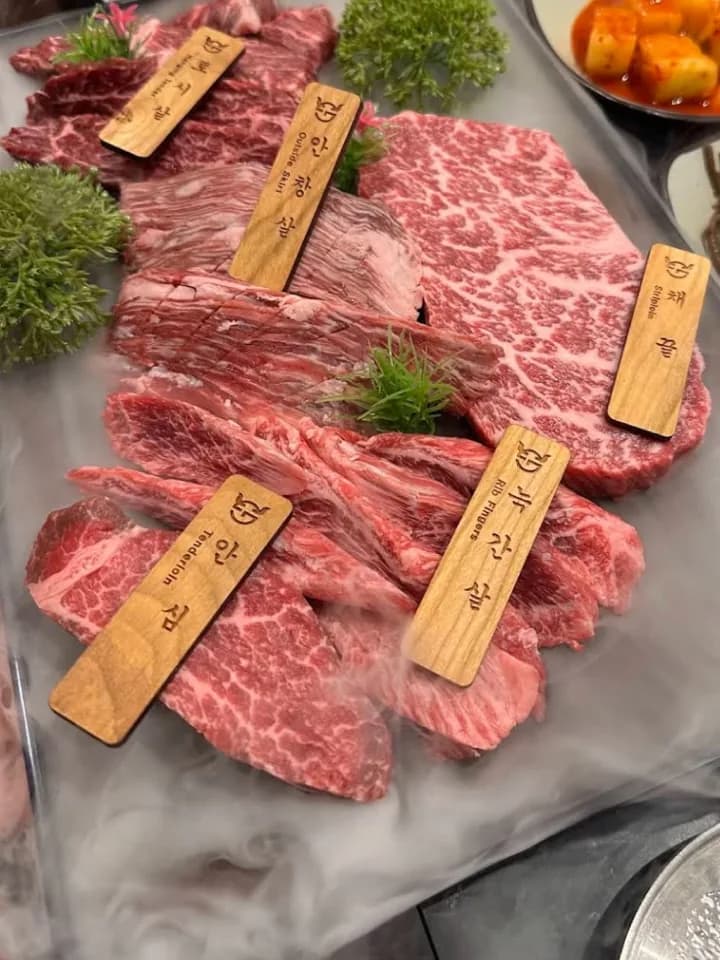
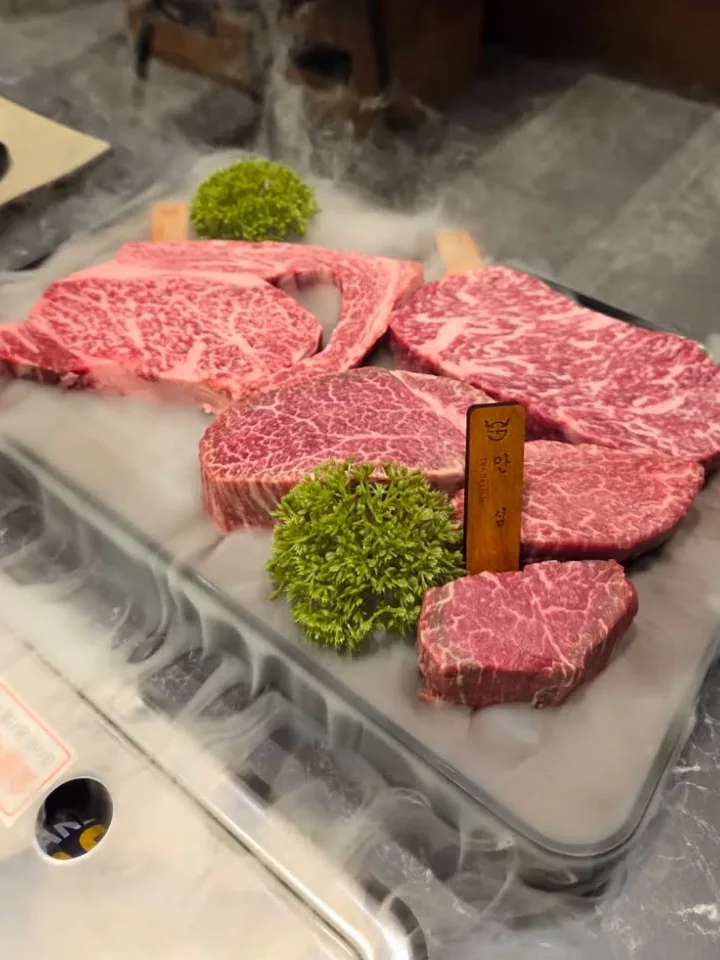
Kkotdeungsim (꽃등심) is the Korean name for the most marbled section of the ribeye. The word is literally "flower" plus "loin" — the flower being the pattern the intramuscular fat makes across the face of the cut. It is a descriptive name, not a poetic one. Look at a good slice and the reason is obvious.
Where the cut sits
The ribeye runs along the back, between the chuck and the loin. It is a muscle that does comparatively little work, which is why it stays tender, and it carries fat both around and through it.
Korean butchery divides this region more finely than most Western butchery does. Deungsim covers the loin broadly; kkotdeungsim is specifically the well-marbled eye section, the part where the fat webs most densely through the muscle. A menu that lists kkotdeungsim rather than just "ribeye" is making a narrower claim about which part of the primal you are getting.
Why it is usually the centrepiece
Three things make it the cut most tables build the meal around.
The marbling is even. The fat is distributed through the muscle rather than sitting in a seam at the edge, so every bite carries the same richness. Cuts with edge fat give you two different experiences depending on where you bite.
It is forgiving for about ten seconds. Relative to chadolbaegi, which fails in an instant, kkotdeungsim has a slightly wider window between properly cooked and overcooked. Not wide — but enough that a table can talk while it cooks.
It tastes like the argument for Hanwoo. If someone wants to understand what the fuss is about in a single cut, this is the one that makes the case.
Grilling it properly
The instinct with an expensive marbled cut is to treat it gently. That is wrong. Kkotdeungsim wants hard, direct heat and a short stay.
- Sear hard. The surface should brown quickly. Low heat renders the fat out slowly and leaves the meat grey and dry — you pay for marbling and then cook it into the coals.
- One turn. Both sides get a proper crust; nothing more is needed.
- Off while the centre is still blushing. Medium-rare to medium. Past that, the fat that has not rendered has firmed up, and the texture turns waxy rather than rich.
- Rest for a moment, then cut. Thirty seconds on the cool edge of the grill is enough at this thickness.
- Cut across the grain. Shorter fibres, easier chew.
What to eat it with
Kkotdeungsim is rich enough that it usually wants salt rather than sauce. A light dip of gireumjang — sesame oil, salt, pepper — is the traditional treatment, and it adds aroma without competing.
Heavy ssamjang on a premium marbled cut is a matter of taste, but it does bury what you are paying for. Save the thicker paste for leaner cuts and for ssam wraps built around something that needs the help.
Something sharp on the side does help: pickled radish, a little kimchi, or the raw onion salad. It resets between bites so the third piece tastes as good as the first.
How to judge one before it is cooked
- The marbling should read as a fine web across the whole face, not a few fat bands.
- The lean should be a clear bright red; dull or brownish edges suggest it has been sitting sliced.
- The fat should be cream-coloured rather than yellow.
- The slice should hold its shape rather than sagging — a sign it is cold and freshly cut.
At GOSANCHON the cuts sit in the chilled cabinet at the entrance and are cut to order at the butcher's counter, so you can apply all four of those checks before anything reaches the grill. The menu lists what is currently on the board.