
The Cuts
Chadolbaegi: The Cut That Cooks in Seconds
16 September 2026 · 4 min read
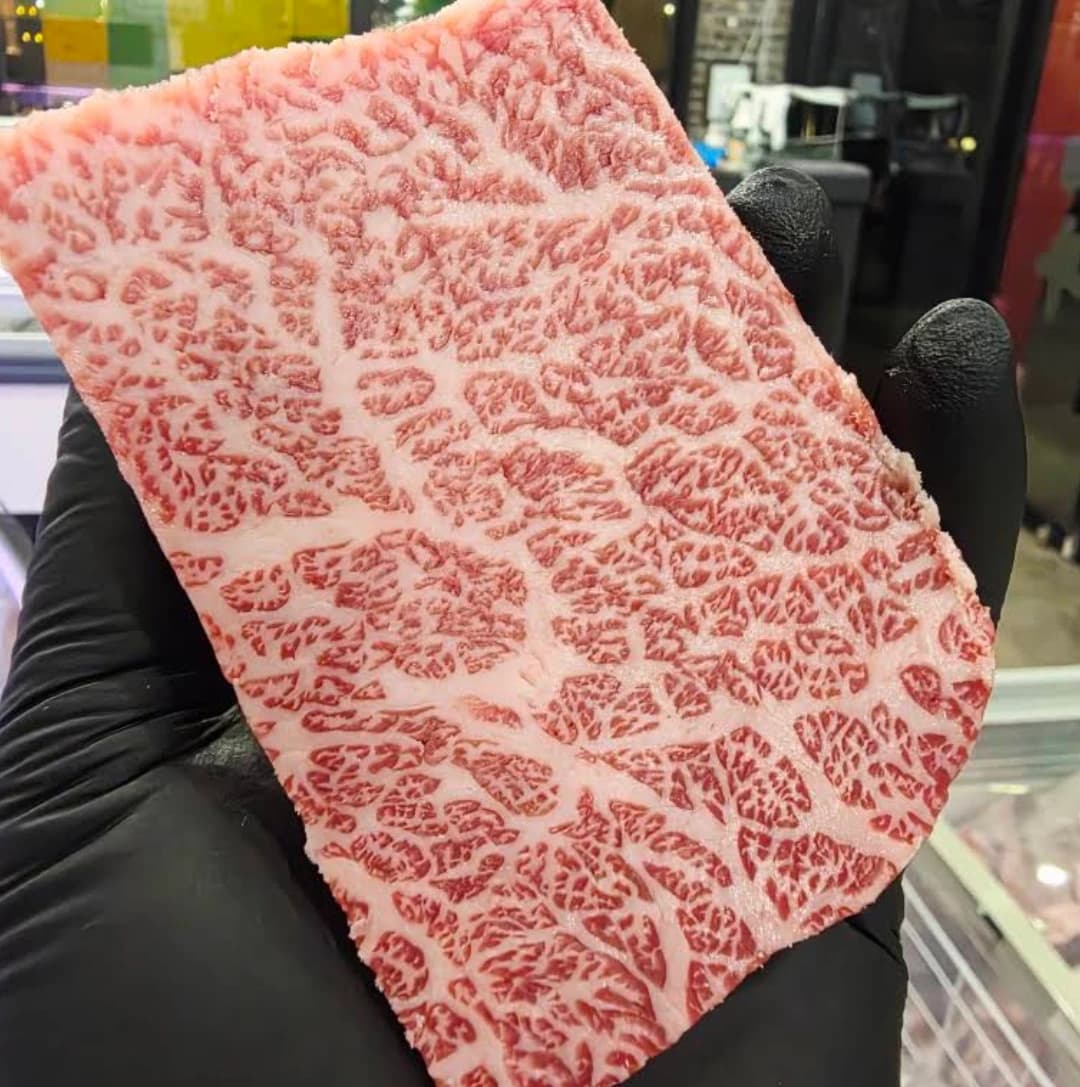
Chadolbaegi (차돌박이) is beef brisket, sliced so thin it is almost translucent. On a hot grill it curls, browns and is finished in roughly ten to fifteen seconds a side. It is the fastest thing on a Korean BBQ table and the easiest to get wrong.
Where it comes from
Chadolbaegi is cut from the brisket — the muscle across the lower chest. In most Western cooking that is a slow-and-low cut: hours of braising or smoking to break down a hard-working muscle. Korean cooking arrives at the same problem from the opposite direction. Instead of cooking it long enough to soften, it is sliced thin enough that toughness never gets a chance to matter.
The slicing is the technique. At that thickness the muscle fibres are short, the fat is distributed in fine ribbons across the surface, and heat reaches the centre almost instantly.
Getting slices that thin requires the meat to be partially frozen when it is cut — you cannot do it by hand with a warm brisket and a sharp knife. That is why chadolbaegi arrives at your table pre-sliced and laid out in overlapping sheets rather than portioned to order like a thick cut.
What it tastes like
Brisket has a stronger, more mineral beef flavour than the premium loin cuts. The fat is firmer than ribeye fat and renders into something closer to savoury than rich.
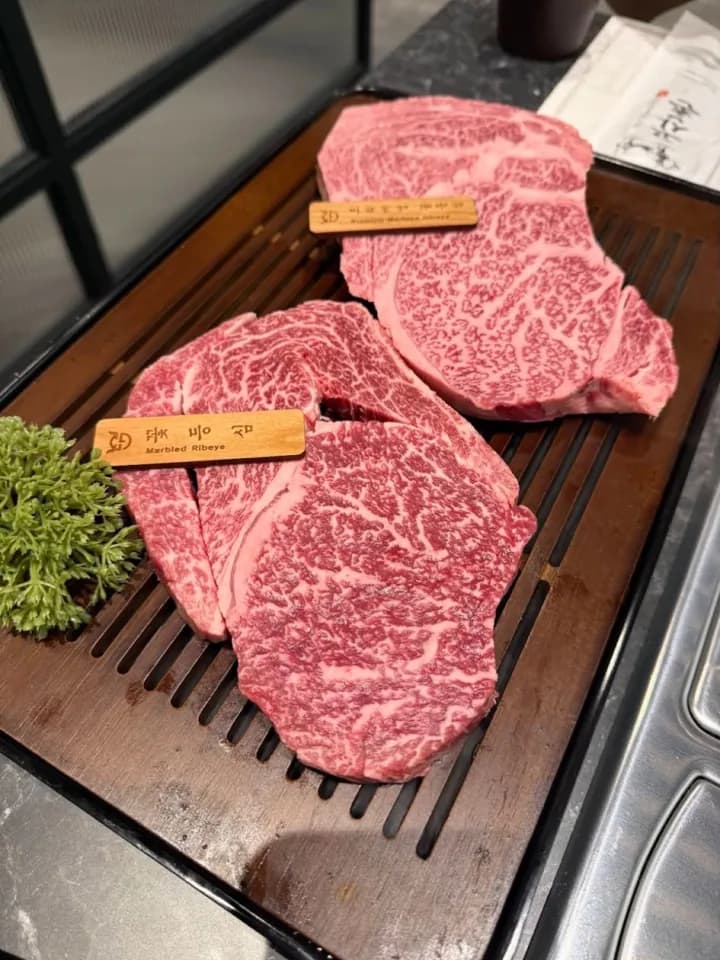
The result is a cut that reads as beef rather than as luxury. That is precisely its role at a table built around marbled cuts: it resets the palate. After two rounds of heavily marbled ribeye, chadolbaegi tastes clean and direct, and makes the next rich round land properly again.
How to cook it, and how to ruin it
There is one real rule: do not walk away from it.
- Hot grill, single layer. Lay the slices flat with space between them. Overlapping slices steam rather than sear.
- Ten to fifteen seconds. The edges curl and the surface turns from red to brown. That is the entire signal.
- One flip, then off. A second flip is usually a second too long.
- Do not press it down. Pressing squeezes out the fat that makes it worth eating.
Left on for an extra thirty seconds, chadolbaegi goes from tender to leathery. It does not fail gradually the way a thick cut does; it is good and then it is not. This is the cut where the staff tending the grill earn their keep.
How it is eaten
Chadolbaegi is traditionally dipped in gireumjang — sesame oil with salt and pepper — rather than the thicker ssamjang paste. The oil suits the leaner, more mineral character, where ssamjang would bury it.
It also works particularly well with something sharp alongside: pickled radish, raw onion in a light dressing, or the vinegared salad that often comes with it. The acidity cuts the fat that has just rendered across the surface.
Many tables order it between richer rounds rather than at the start or the end, which is exactly where it does the most work.
A note on what it is not
Chadolbaegi is sometimes described on English menus as "beef belly", which causes confusion with samgyeopsal — pork belly, an entirely different thing from a different animal. If a menu lists both, they are not variations of one cut.
It is also not a premium-grade showpiece, and it is not meant to be. It is a working cut, chosen for what it does to the sequence of a meal rather than for its marbling score.
To see how it sits alongside the marbled cuts on the board, have a look at the menu.