
The Cuts
Chaekkeut: The Korean Striploin, Explained
19 September 2026 · 3 min read
Chaekkeut (채끝) is the Korean name for striploin, cut from the short loin just behind the ribs, further back along the animal's spine than kkotdeungsim (ribeye). It's often ordered alongside ribeye for exactly one reason: the two cuts sit close together on the animal but eat very differently.
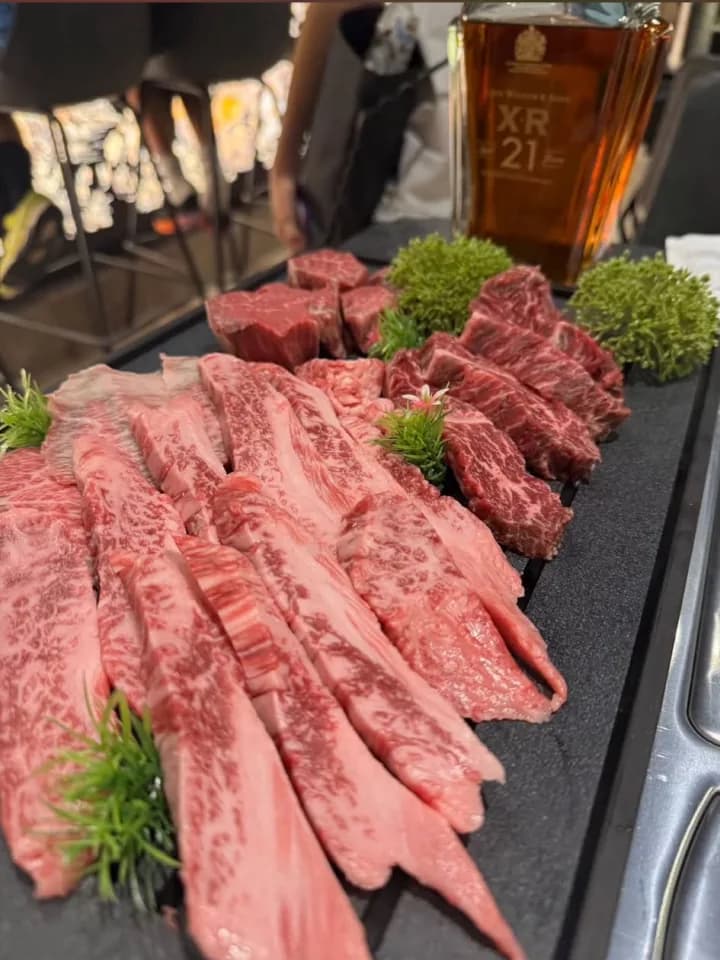
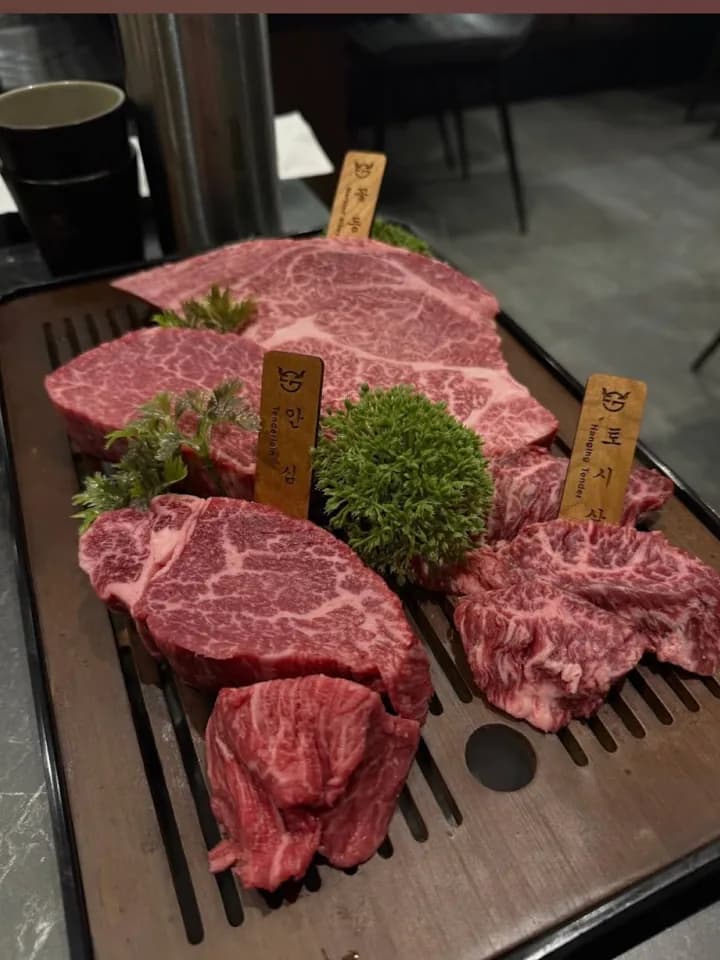
A leaner cut from a harder-working muscle
The name itself hints at its position. Chae (채) suggests a thin strip, and kkeut (끝) means "end" or "tip," describing where this muscle sits, at the tail end of the short loin, just past where ribeye stops. The muscle that becomes chaekkeut does slightly more work than the rib muscles that produce ribeye, which means it develops a firmer grain and a thinner, more defined fat cap along one edge rather than fat distributed evenly through the centre. It still marbles well on a high-grade Hanwoo carcass, but the marbling tends to run in finer, more even lines rather than the broad, flower-like pattern that gives ribeye its name.
Why it "eats cleaner" than ribeye
Because the fat is concentrated at the edge rather than threaded evenly through the whole cross-section, striploin renders differently on the grill. The fat cap crisps and can be trimmed or eaten separately, while the lean core of the muscle stays firm and slightly chewy rather than yielding. The result is a cut that feels lighter after a few bites: less coating on the palate, a cleaner finish, and a texture that holds its shape better than ribeye's softer bite. For diners who find heavily marbled cuts tiring after a while, striploin is usually the more comfortable order.
How it's typically grilled
Chaekkeut benefits from slightly more attention at the grill than ribeye. Because it has less internal fat to protect it from drying out, it's best seared hot and briefly, then rested rather than left on the charcoal. Cut against the grain into thin slices after cooking, it stays tender despite being a firmer muscle than ribeye. Like most premium Hanwoo cuts, it needs little beyond salt, since the point of the cut is to taste like well-raised beef rather than a sauce.
Where it sits relative to sirloin
Internationally, the cut closest to chaekkeut is what English-language butchery calls striploin, New York strip, or sirloin, depending on the country. All describe roughly the same muscle: the longissimus running along the back, past the rib section. What varies between countries is where exactly the boundary is drawn between the rib end and the sirloin end, and how much of the surrounding fat cap is left on when it's portioned. In Korean butchery, chaekkeut is typically trimmed to leave a modest, even fat cap along one side rather than the thicker cap sometimes left on a Western strip steak, which is part of why it can look leaner on the plate than its Western counterpart despite coming from the same general muscle.
Ordering chaekkeut and pairing it
Because striploin and ribeye come from adjacent sections of the same loin, ordering both at the same table is a natural way to taste how location on the animal changes texture and richness even within cuts of a similar grade. Chaekkeut also works well as a palate reset between richer cuts, or as the cut to return to if the meal has leaned heavily marbled so far.
At GOSANCHON
Chaekkeut is available as Striploin (채끝) at 200g or 300g, and as Premium Striploin (프리미엄 채끝) at the same weights for a higher grade, cut to order at the butcher's counter. See it alongside every other cut on the menu.