
The Beef
Dry-Aged vs Wet-Aged Beef, and Why Korean BBQ Skips Both
19 September 2026 · 3 min read
Ask a steakhouse about aging and you'll usually hear about two processes: wet aging and dry aging. Both are ways of letting time change beef before it's cooked. Walk into a Korean BBQ house, though, and the Hanwoo in the chilled cabinet has typically gone through neither — and that's not an oversight, it's the point.
Wet aging: quiet, cautious, industry-standard
Wet aging is what happens to almost all beef sold anywhere, whether anyone calls it that or not. The meat is vacuum-sealed in plastic soon after butchering and held under refrigeration, often for one to three weeks. Sealed in its own juices, the beef doesn't lose moisture, but enzymes naturally present in the muscle continue to break down connective tissue, gently tenderising it. Flavour changes only slightly. It's the low-risk, low-cost method, and it's why supermarket steak can still be reasonably tender.
Dry aging: intentional loss for concentrated flavour
Dry aging is the more dramatic version. Whole cuts are hung or racked in a temperature- and humidity-controlled room, fully exposed to circulating air, for anywhere from two to eight weeks or longer. Moisture evaporates steadily from the surface, and the exterior has to be trimmed away before cooking, so a dry-aged cut can lose fifteen to thirty percent of its starting weight. What's left is more concentrated in flavour, with the funky, nutty, almost cheese-like notes that come from slow enzymatic and mild microbial activity on the surface. It rewards beef that already has a strong flavour base — heavily marbled, well-structured muscle that can survive the moisture loss without falling apart.
Why Hanwoo mostly skips both
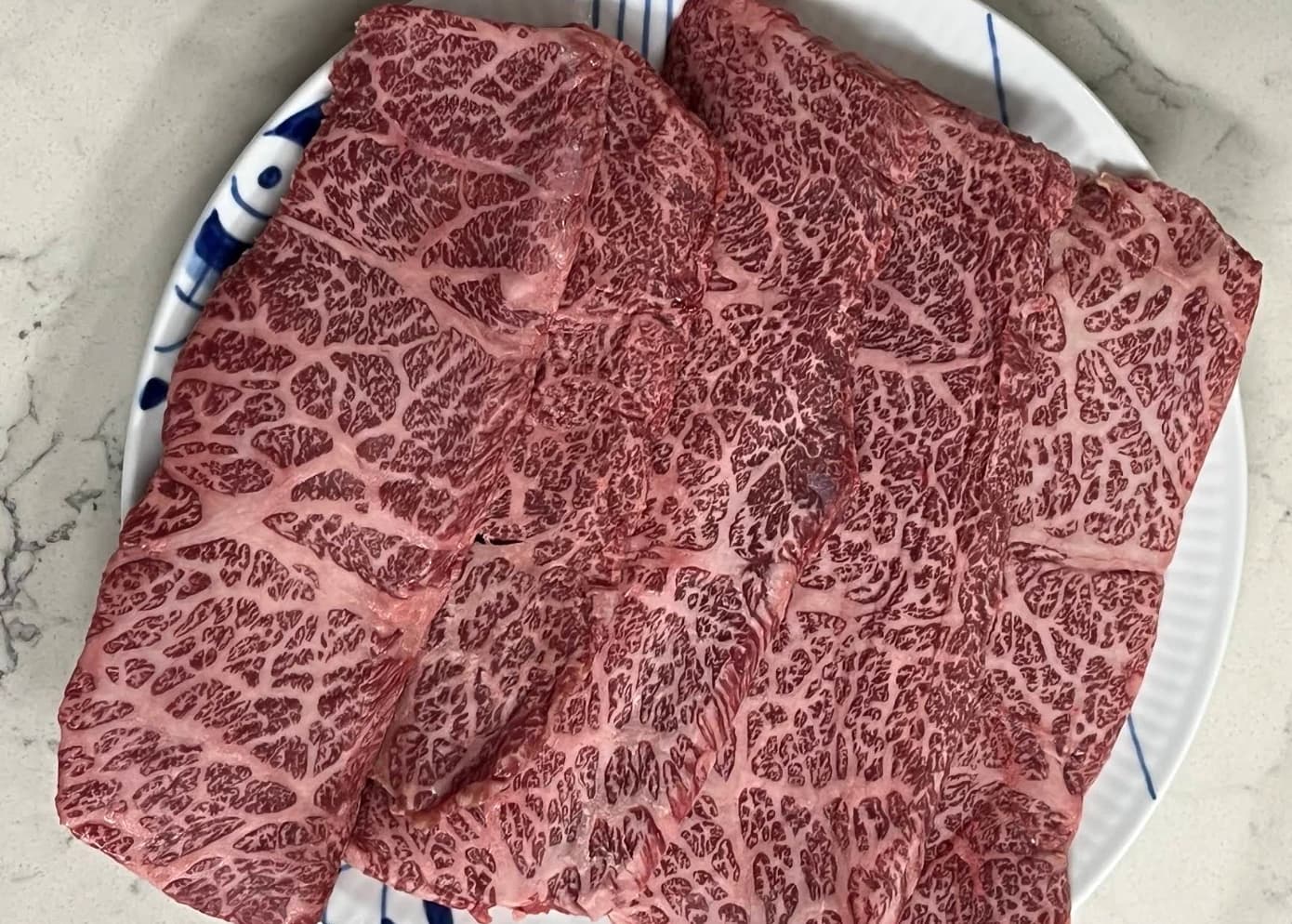
Hanwoo doesn't fit neatly into either tradition, and Korean BBQ generally doesn't ask it to. The marbling that defines a high-grade Hanwoo carcass — fine threads of intramuscular fat distributed evenly through the muscle — is already the flavour engine. Aging, wet or dry, is a tool for improving tenderness and complexity in cuts that need help getting there. A well-graded Hanwoo cut doesn't need much help: the fat renders on contact with charcoal heat and does the flavour work that weeks of aging would otherwise be doing.
There's also a practical side. Dry aging in particular sacrifices weight and requires cuts thick and fatty enough to survive weeks of moisture loss without drying out completely — a profile that suits a large Western-style ribeye more than the smaller, more precisely portioned cuts common on a Korean BBQ menu. Most Hanwoo served at a serious Korean BBQ table is closer to fresh: graded, butchered, chilled, and served within a short window, so what reaches the grill is defined by the animal and the cut, not by weeks in a curing room.
Aging cuts versus aging whole carcasses
It's also worth separating aging from hanging. Every carcass rests briefly after slaughter regardless of style, simply to let rigor mortis pass and the muscle relax before butchery. That short rest isn't aging in the wet or dry sense; it's a food-safety and handling step every carcass goes through. Aging proper only begins once a specific cut, not the whole carcass, is sealed or exposed for the extended periods described above.
What to look for instead
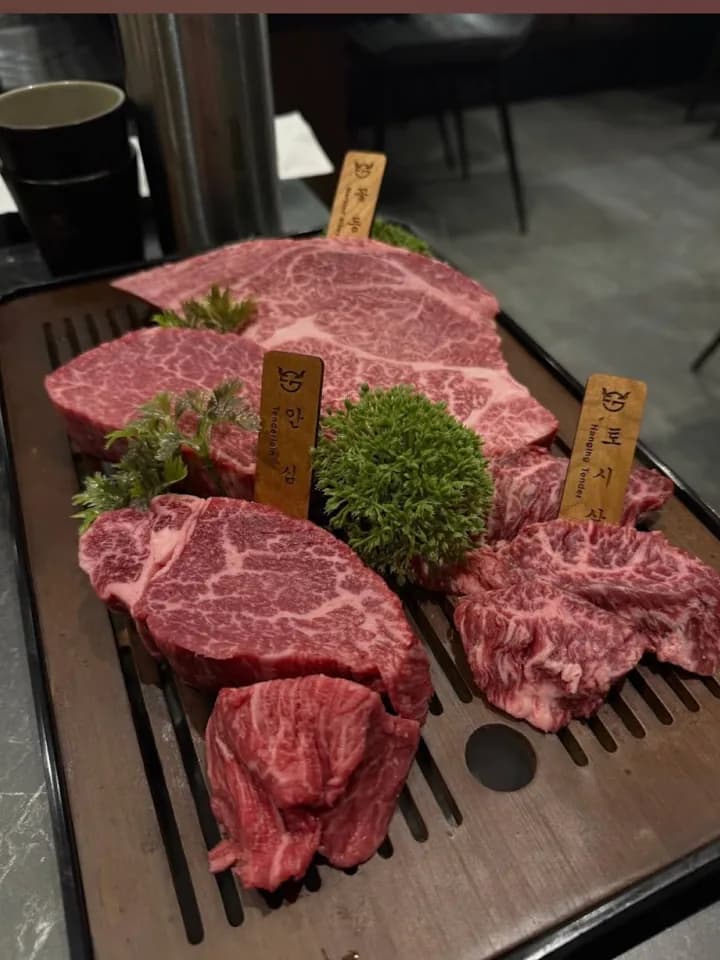
Because Hanwoo isn't chasing an aged, funky flavour profile, what matters at the table is different: clean, bright red muscle, marbling that looks like a fine web rather than isolated streaks, and a butcher's counter you can actually see. Freshness and grading do the work that a steakhouse would otherwise ask dry aging to do.
At GOSANCHON, Hanwoo is displayed in a chilled cabinet and cut to order at the butcher's counter, not pulled from a curing chamber. See what that looks like on the menu.