
The Fire
How a Korean BBQ Restaurant Manages Smoke and Ventilation
19 September 2026 · 2 min read
Every table grilling over live charcoal is, technically, a small open fire producing smoke a few feet from where people are eating and talking for the next two hours. Whether that experience feels like a well-run restaurant or a smoky ordeal comes down almost entirely to one thing most guests never think about: ventilation.
Where the smoke actually goes
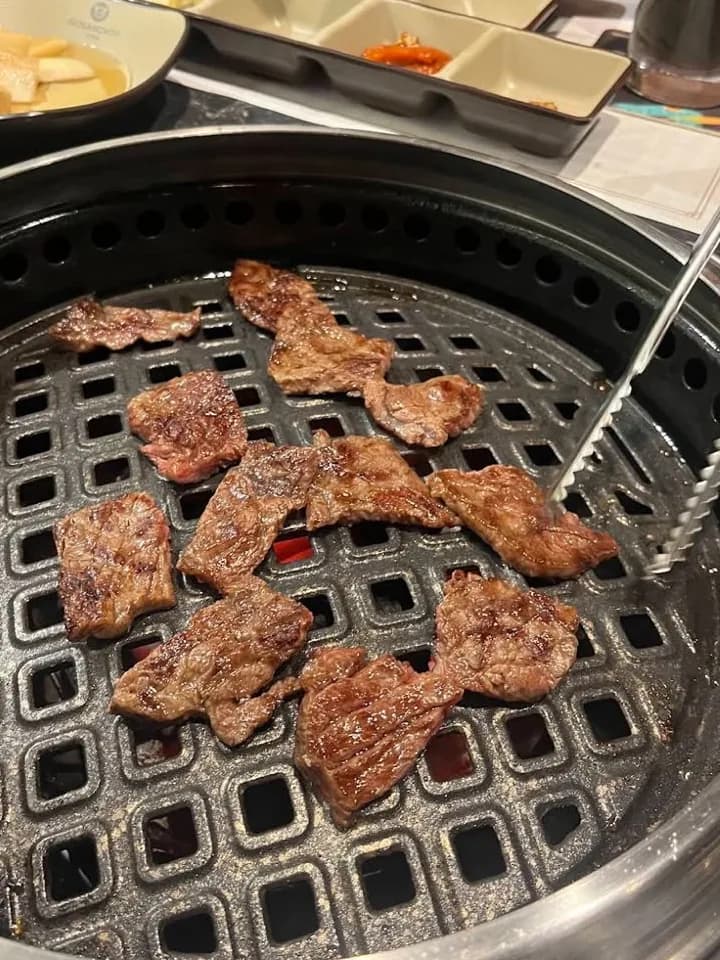
A well-designed charcoal BBQ setup pulls smoke away from the table before it has a chance to spread across the room, usually through a downdraft or overhead extraction system built directly into or above each grill. The goal isn't to eliminate smoke entirely, since a little rising smoke is part of the sensory experience of grilling over charcoal, it's to move it up and out fast enough that it doesn't hang over the table, cling to clothing, or drift into neighbouring seats.
Why this is harder than it sounds
Charcoal produces more particulate smoke than gas, and it produces it unevenly, spiking when fat drips onto the coals and flares. A ventilation system has to handle that inconsistency across every table running at once during a full service, not just manage a steady, predictable output. Get it wrong and the whole room smells like the aftermath of a fire rather than the middle of a good meal.
This is one of the real costs of choosing charcoal over gas or electric grills, alongside the labour of lighting, tending, and swapping it. Ventilation infrastructure is expensive to install and run properly, which is part of why restaurants that skip it tend to skip charcoal too.
What good ventilation feels like
You can tell within the first few minutes of sitting down. In a well-ventilated charcoal room, you smell the grill, the smell that makes the food itself more appetizing, without your eyes stinging or your clothes carrying the smell home with you afterward. Air over the table should feel like it's moving, drawn steadily upward rather than sitting still and thickening as the meal goes on.
Poor ventilation shows up the opposite way: a visible haze building over the room, a smell that gets heavier rather than staying constant, and the unmistakable moment near the end of a meal when everyone realizes their clothes smell like smoke.
Why it matters beyond comfort
Ventilation isn't just about comfort, though that alone is reason enough to take it seriously. Smoke that isn't cleared efficiently also settles onto the food and the room's surfaces, changing the character of what should be a clean, live-fire char into something closer to stale smoke residue. A restaurant serious about its charcoal grilling has to be equally serious about clearing the smoke it produces.
At GOSANCHON, each table's charcoal grill is set up with extraction built for exactly this, so the room carries the smell of good grilling without the discomfort of bad smoke. Come see the space for yourself by visiting, or read more about what a table feels like in the experience.