
The Beef
Reading the Cabinet: The Korean Beef Display Counter
19 September 2026 · 3 min read
Walk into a serious Korean BBQ restaurant and the first thing you should look at is not the menu. It is the chilled display cabinet, usually near the entrance or the butcher's counter, holding the cuts of beef the kitchen will actually serve that day. Learning to read it tells you more about the meal ahead than a page of printed descriptions.
What You're Actually Looking At
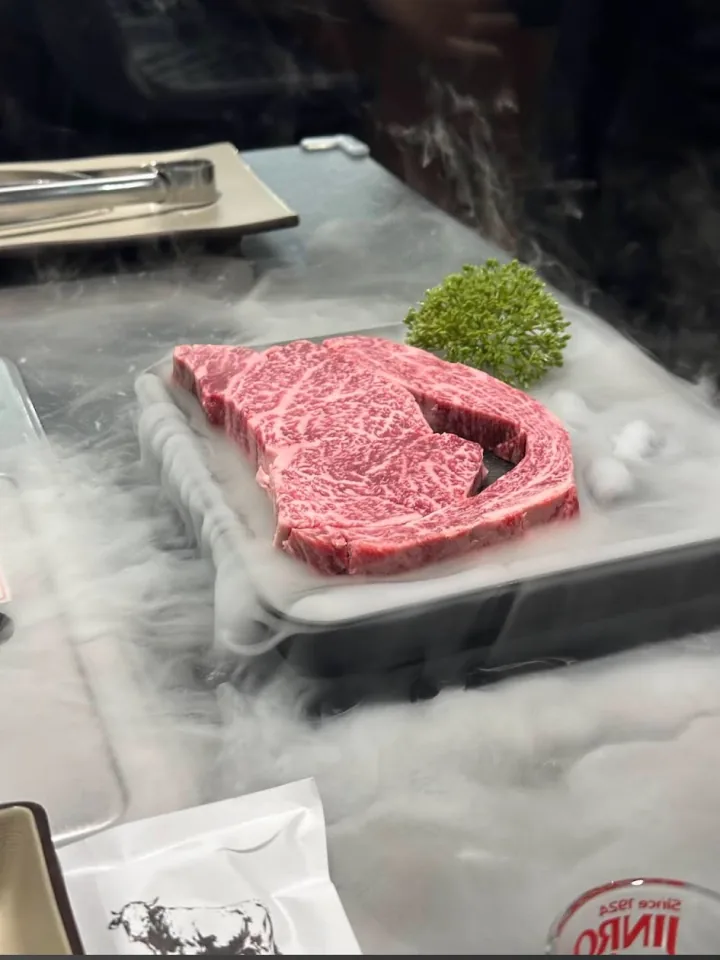
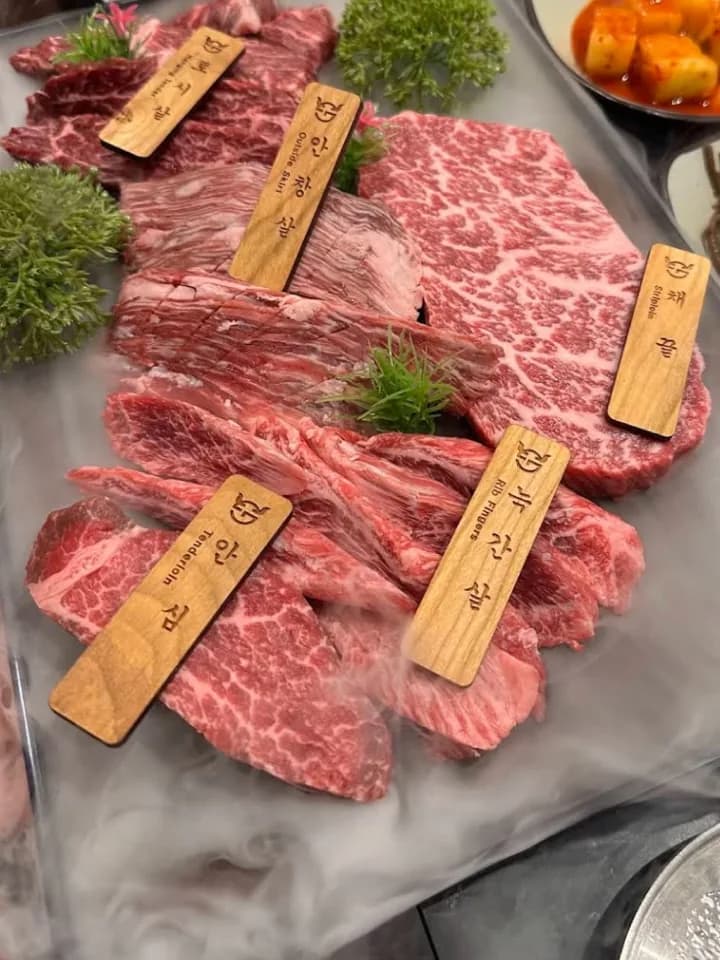
A beef display cabinet is refrigerated glass built to hold whole and half cuts of beef at a safe, consistent temperature while keeping them visible. The cuts inside are not props. They are the same pieces of Hanwoo (authentic Korean native beef) that a butcher's counter will slice to order once you choose. Seeing the meat before it is cut lets you judge things a menu description cannot show: the grain of the muscle, the way fat is distributed through it, and the colour of the exterior, which should be a clean, deep red rather than dull or greying.
Marbling You Can See With Your Own Eyes
The defining feature of well-marbled beef is the fine, even lacing of intramuscular fat running through the muscle, visible as a web of white against red. This marbling is what melts during grilling and carries flavour through the meat rather than sitting only on the surface. Standing at the cabinet, you can compare cuts directly: a ribeye or striploin cut from a well-marbled animal shows that lacing clearly, and it should look consistent through the piece rather than patchy or concentrated in one spot.
Why Restaurants Bother With This at All
A display cabinet is more expensive to run and more work to maintain than simply storing beef out of sight in a walk-in. Restaurants keep it anyway because it turns freshness into something a guest can verify rather than take on faith. It also does something subtler: it forces the kitchen to keep a clean, well-organised inventory, because a messy or thinning cabinet is visible to every guest who walks past. A restaurant that keeps its cabinet looking exactly as good at 9pm as it did at open is telling you something about how it manages its beef all day.
Using the Cabinet to Order Well
Once you understand what you're looking at, the cabinet becomes a genuinely useful ordering tool. If two cuts look similar in the display but are priced differently, that's worth asking about; it usually comes down to the specific muscle, its natural tenderness, and how large a piece is being served. If you're deciding between a smaller, leaner cut and a larger, richly marbled one, the visual difference in the cabinet is often the clearest way to decide which fits your appetite, rather than trying to picture it from a menu line.
It's Fine to Ask to Look Closer
There's no need to decide from a distance. Asking staff to point out a specific piece, or to explain what separates one cut from the one beside it, is a normal part of ordering at a butcher's-counter restaurant, not an imposition. Guests who visit regularly often develop a habit of comparing what's in the cabinet against what they remember from a previous visit, since a whole animal's cuts are never quite identical from one delivery to the next. That small variation is part of what makes reading the cabinet worth doing every time, rather than treating one visit's impression as permanent.
The Cabinet Is the Real Menu
A printed menu tells you names, weights, and prices. The cabinet tells you what the kitchen actually has to work with today. Reading it before you sit down, or asking your server to walk you through it, turns ordering from a guess into a decision based on what's in front of you.
At GOSANCHON, Hanwoo is kept in a chilled display cabinet at the entrance and cut to order at the butcher's counter once you've chosen. The menu is a good starting point before you see the cabinet in person.