
The Cuts
Premium vs Regular Hanwoo: Same Cut, Different Grade
19 September 2026 · 3 min read
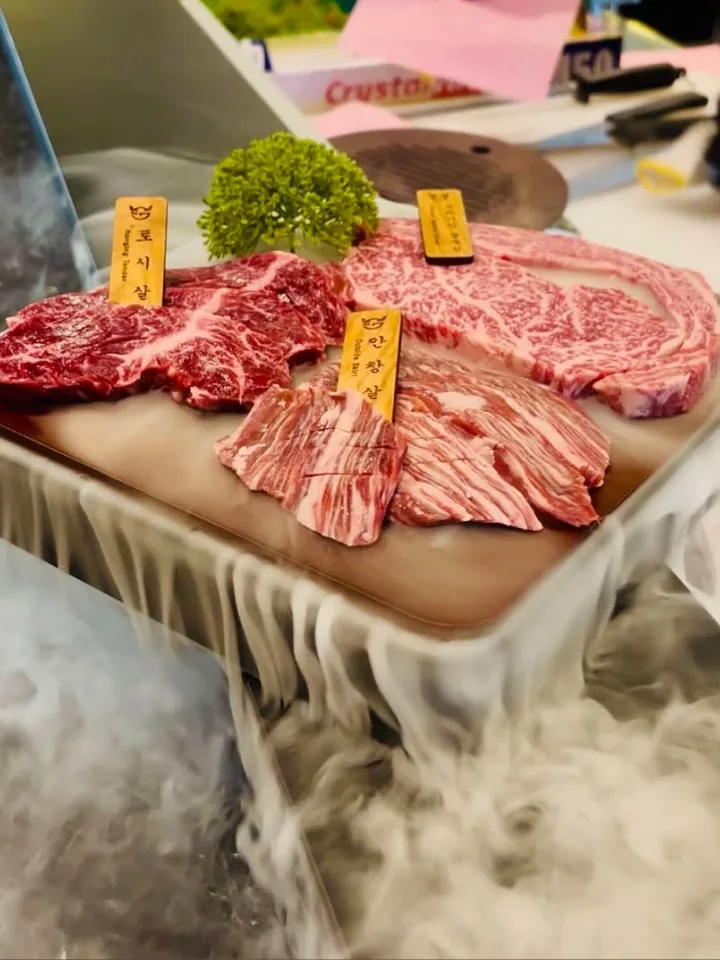
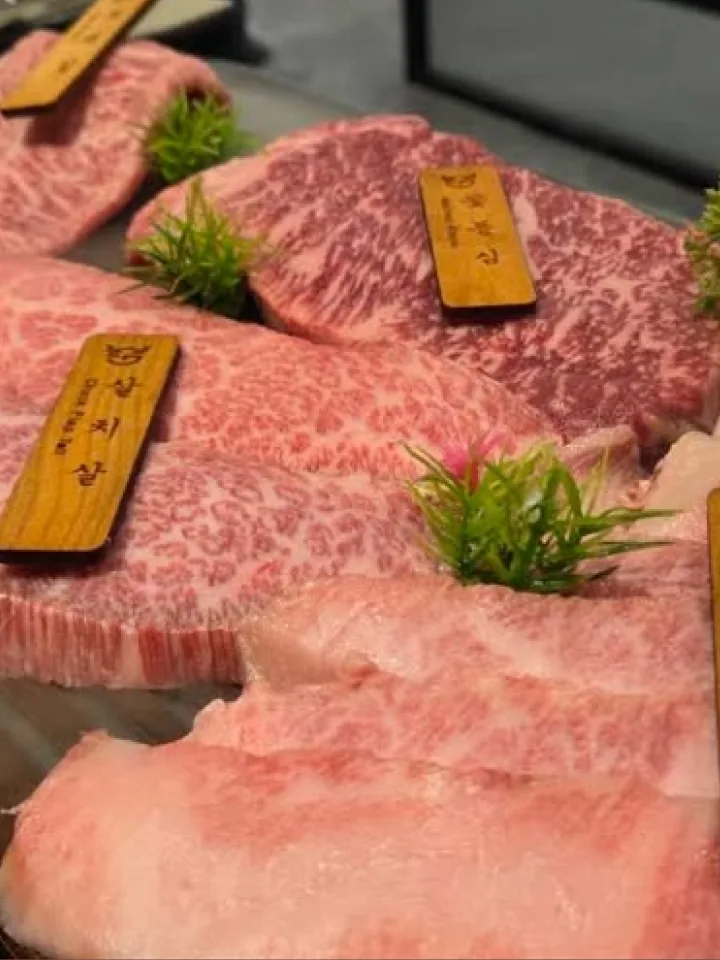
One of the more useful ways to understand Hanwoo grading isn't through a chart of letters and numbers. It's by ordering the same cut twice, at two different grades, and tasting them side by side. A handful of Korean BBQ menus make that comparison possible in the first place, because they carry both tiers of the same muscle rather than picking one and dropping the other, and once you've tasted it that way, the abstract idea of grading stops being abstract.
What "Grade" Actually Measures
Hanwoo, like other well-known marbled beef traditions, is graded largely on how finely and evenly fat is distributed through the muscle, along with colour, texture, and maturity. A higher grade doesn't mean a different cut. It means the same cut carries a denser, finer web of intramuscular fat, the marbling that gives premium Korean beef its richness and much of its tenderness, since fat renders at a lower temperature than muscle fibre does and softens the bite around it as it does. Two ribeyes from the same part of two different animals can look quite different on the plate purely because of this.
The Same Three Cuts, Two Tiers
At GOSANCHON, this comparison is available on three cuts. Marbled Ribeye, kkotdeungsim, comes in a regular grade at 200g or 300g, and a Premium grade at the same two weights. Striploin, chaekkeut, follows the same pattern, regular at 200g or 300g and Premium at matching portions. Tenderloin, ansim, is offered at 150g or 250g in both regular and Premium grades. In each pair, the cut, the muscle, and the portion sizes are identical. Only the grade, and the price that reflects it, changes, which is precisely what makes a direct comparison so easy to arrange at a single sitting.
What the Difference Tastes Like
On the grill, a higher grade of the same cut renders more visibly: fine seams of fat soften and glisten as the surface sears, and the finished bite carries more of that characteristic richness without needing extra fat trimmed away first. The texture is typically softer too, since more marbling means less lean muscle fibre per bite. None of this changes what the cut fundamentally is. A Premium ribeye is still ribeye. It's a denser, more consistent version of the same thing, closer to the top of what that particular muscle is capable of. The difference tends to be most obvious in the first bite, before seasoning or sauce has a chance to blur it.
Deciding Which to Order
There's no wrong choice between the two. A regular grade still delivers genuine Hanwoo character at a lower price point, and is a sensible way to try a cut for the first time or order in volume for a larger table. Premium makes more sense when the point of the meal is that specific cut: a special occasion, a smaller portion eaten slowly, or simply wanting to taste what the top of that muscle's range is capable of. Ordering both at once, one regular and one Premium of the same cut, remains the most direct way to feel the difference rather than take it on description alone, and it tends to be the single most convincing way to understand what a grade actually buys. Larger tables in particular can split the difference: order regular grade across most of the meal and add a single Premium portion of one cut as the highlight, rather than committing the whole table to one tier.
Both tiers, across ribeye, striploin, and tenderloin, are listed with their exact weights and prices on the menu, making a side-by-side order easy to plan before arriving.