
The Fire
The One-Turn Rule: How Often to Flip Steak on the Grill
19 September 2026 · 3 min read
Ask ten people how often to flip a steak and you'll get ten different answers. Ask a Korean BBQ grill tender and the answer is short: once, maybe twice for a thick cut, and never more than that. It sounds almost too simple for something people worry about so much, but the reason behind it is pure heat science.
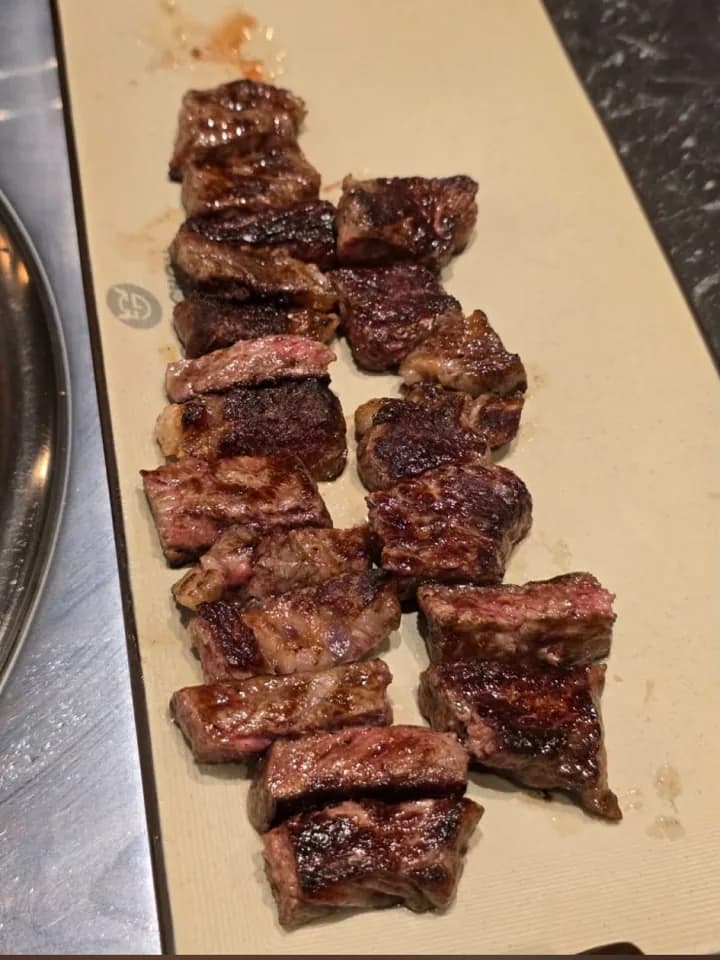
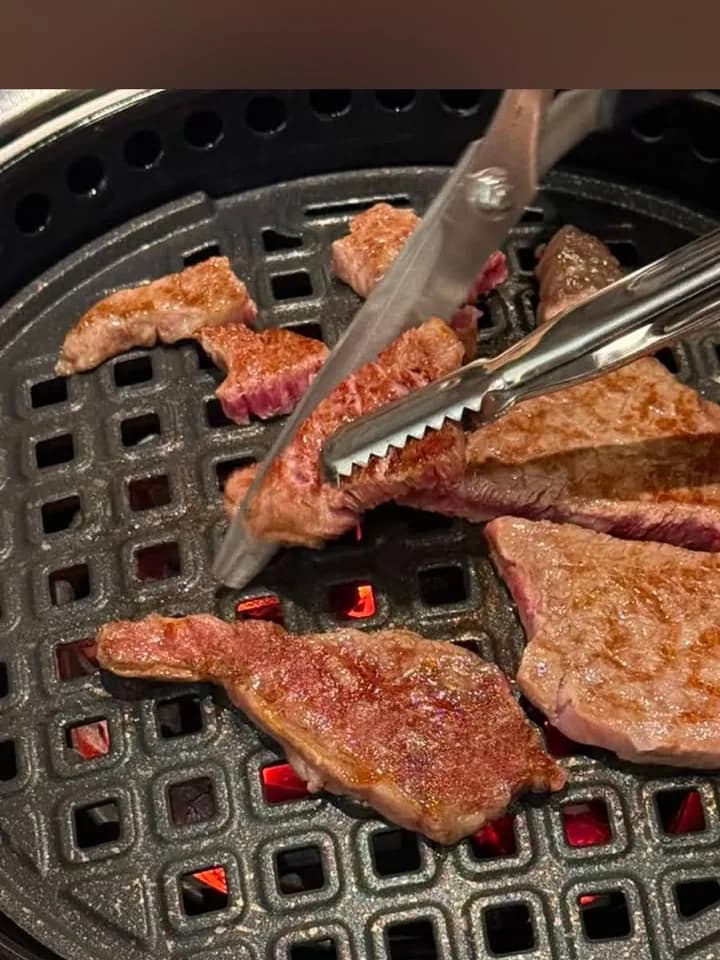
What flipping actually interrupts
Every time a piece of beef leaves the grill plate, even for a second, its surface temperature drops. Flip it repeatedly and the crust never gets an uninterrupted stretch of direct heat long enough to actually form. Instead of one clean sear, you get a surface that's been half-cooked from four different angles and fully browned from none of them.
A single turn does the opposite. It gives one side the full, uninterrupted contact time it needs to dry, brown, and crust before the other side gets its turn. The result is a cut with a defined outside and a distinct, tender centre, rather than a piece that's uniformly grey from edge to edge.
Why this matters more with charcoal
Over live charcoal, the effect is sharper than over gas or electric. Charcoal's radiant heat browns a surface fast, in the time it takes to develop real flavour through the Maillard reaction, the browning that gives grilled beef its savoury depth. Constant flipping robs each side of that window. You end up with beef that's cooked through but never properly seared, which is a different and lesser thing.
This is also why thickness changes the rule slightly. A thin cut like chadolbaegi (thinly sliced beef brisket) or a marinated ribeye needs barely a minute a side and may only need the one turn to be done entirely. A thicker cut like a 300g ribeye or striploin might get turned once, rested at the edge of the grill, then turned again briefly to firm the second side, still nowhere near the constant flipping instinct tells most people to do.
Reading doneness without cutting in
The one-turn rule only works if you know when to make that single turn. The tell is on the surface, not the clock: when the underside has visibly browned and the edges of the cut start to show the faintest change in colour climbing up the sides, it's ready to turn. Cutting into a piece to check is the one move that undoes everything the technique was protecting, since it lets the juices that should stay inside escape onto the grill plate instead.
Letting the beef do the work
A cut of well-marbled Hanwoo, Korean native beef, has enough fat running through it to render and self-baste as it cooks. Constant flipping fights that process by never letting heat build evenly in one direction. One turn respects it, letting the fat do its job on one side at a time.
At GOSANCHON, the staff tending each table's grill apply exactly this restraint, turning premium cuts once and letting the fire do the rest. Watch it happen for yourself over the menu, or read how the whole table works over charcoal in the experience.