
The Beef
How to Tell Good Hanwoo Beef: Colour, Sheen, Texture
19 September 2026 · 3 min read
Before a single cut of Hanwoo, Korean native beef, reaches the grill, most of what determines how it will taste has already been decided, and much of it is visible to the eye. Knowing what to look for turns watching a cut come out of a chilled display case into something closer to reading it.
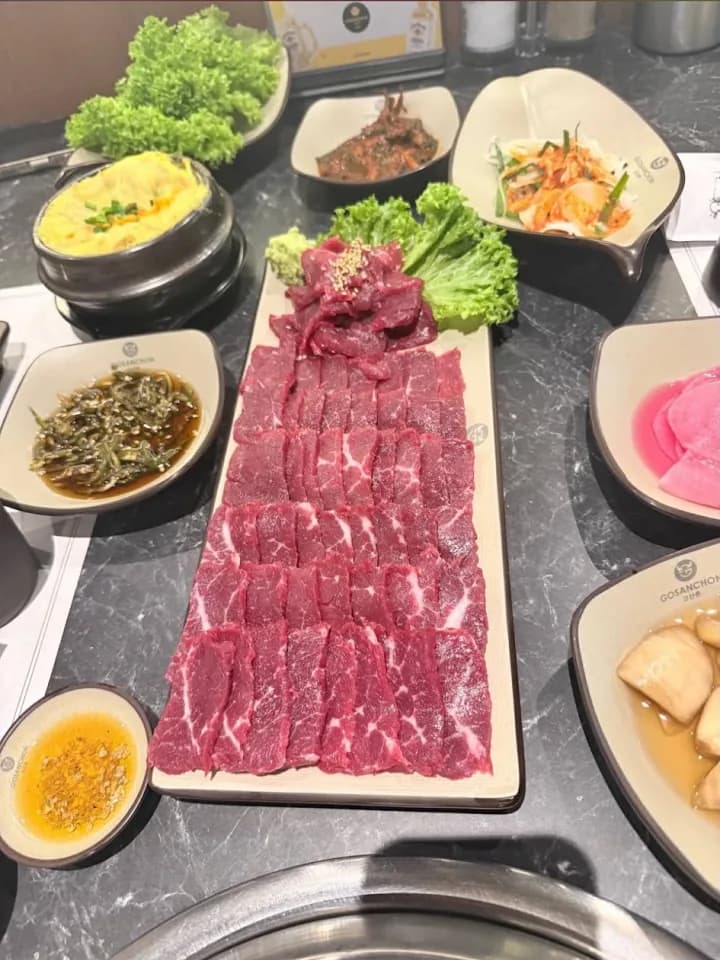
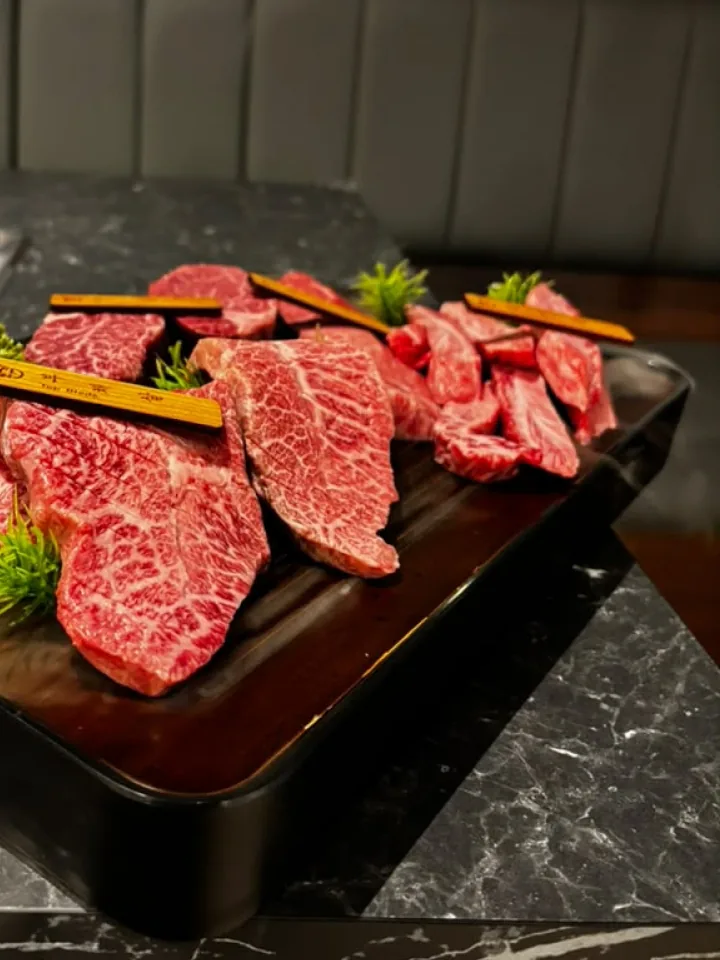
Colour
Good beef has a clear, bright red colour, not the dull brownish-red of a cut that has been sitting too long, and not an artificially vivid red either. The colour should look consistent across the lean muscle, without grey patches, which can signal age or poor handling. Hanwoo in particular tends to show a slightly deeper, richer red than many other beef breeds, a reflection of the breed's own characteristics rather than anything done to it after slaughter.
Marbling
Marbling is the network of white fat running through the muscle in fine threads, rather than sitting as a single slab on one side of the cut. This is the single biggest factor in how a premium cut like ribeye or striploin will taste and feel once grilled. What separates excellent marbling from merely good marbling is distribution: fine, even threads running consistently through the whole cut read as higher quality than fat bunched into a few thick streaks with lean patches in between. The finer and more even the marbling, the more evenly that fat renders on the grill, basting the meat instead of leaving parts of it dry.
Sheen
A fresh, well-handled cut has a slight, natural sheen to it, a subtle glisten rather than a wet or slick surface. That sheen comes from the fat and moisture naturally present in well-marbled beef, and it's one of the fastest visual tells of freshness. A cut that looks dry and matte on the surface, or conversely wet and pooling with liquid, is telling you something worth noticing before it ever reaches the grill.
Texture
Texture is harder to see than colour or sheen, but it shows in how the cut holds its shape. Good beef looks dense and slightly firm rather than loose or separating at the fibres, and a cut with fine marbling tends to look almost silky where the fat threads run through it, distinct from the leaner muscle around them. This is easiest to notice on cuts prepared for display and cut to order at a butcher's counter, where the marbling pattern is visible edge to edge rather than hidden inside a larger piece.
Why this matters before the fire ever touches it
None of colour, sheen, or texture is decoration. Each one is a visible signal of what the grill is about to do with the cut: how it will render, how it will crust, and how tender the centre will be once it's cooked. Reading a cut before it's grilled isn't a party trick, it's the same judgment a butcher makes every time a piece is cut to order.
At GOSANCHON, Hanwoo, Korean native beef, is displayed in a chilled cabinet and cut to order at a butcher's counter, so you can see exactly this before it ever reaches your grill. Explore the cuts on the menu, or read more about how each one is prepared in the experience.