
The Fire
How Long Each Korean BBQ Cut Needs Over Live Charcoal
19 September 2026 · 3 min read
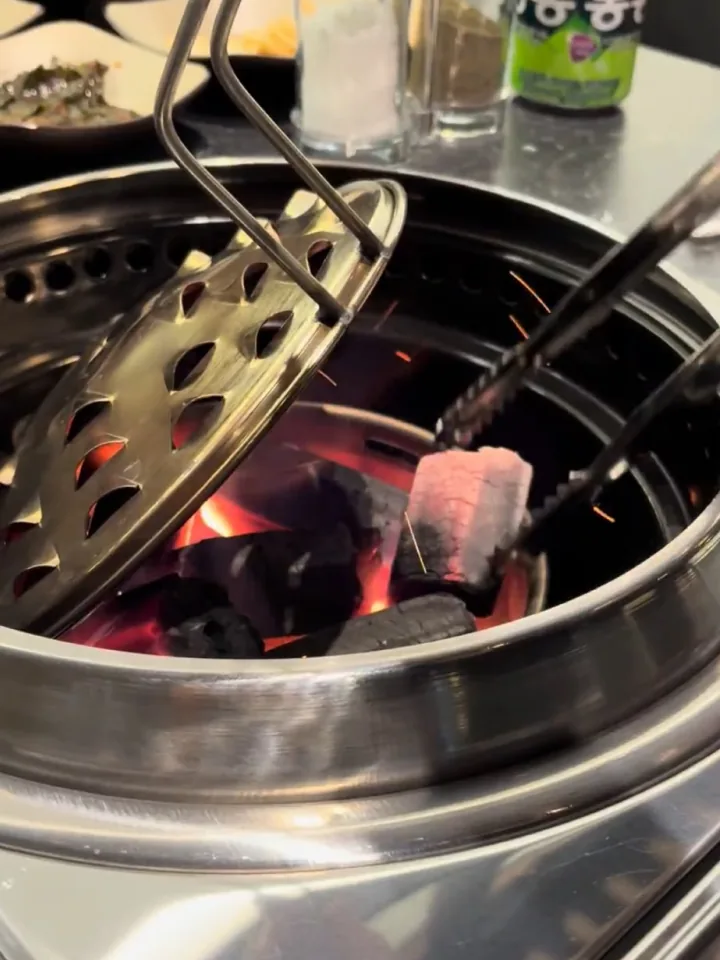
Ask how long a piece of Korean BBQ needs on the grill and the honest answer is: it depends entirely on which piece. Thickness, fat content, and how hard that particular muscle worked on the animal all shift the timing, sometimes by a factor of ten between the fastest and slowest cuts on the same table. What follows is a general guide, not a stopwatch rule, since heat varies by grill and by fire, but it gives a sense of the range you should expect from one cut to the next.
Paper-Thin Cuts: Seconds, Not Minutes
Chadolbaegi, thinly sliced beef brisket, is cut thin specifically so it cooks almost instantly. Over a hot grill, a slice needs only a matter of seconds per side, just long enough for the surface to change colour and the abundant fat to begin rendering. Left any longer, a cut this thin dries out fast, since there's so little mass to hold on to moisture or heat, and a distracted table can easily lose a whole batch of it in the time it takes to refill a drink.
Marinated and Thinner Cuts: Under a Minute Per Side
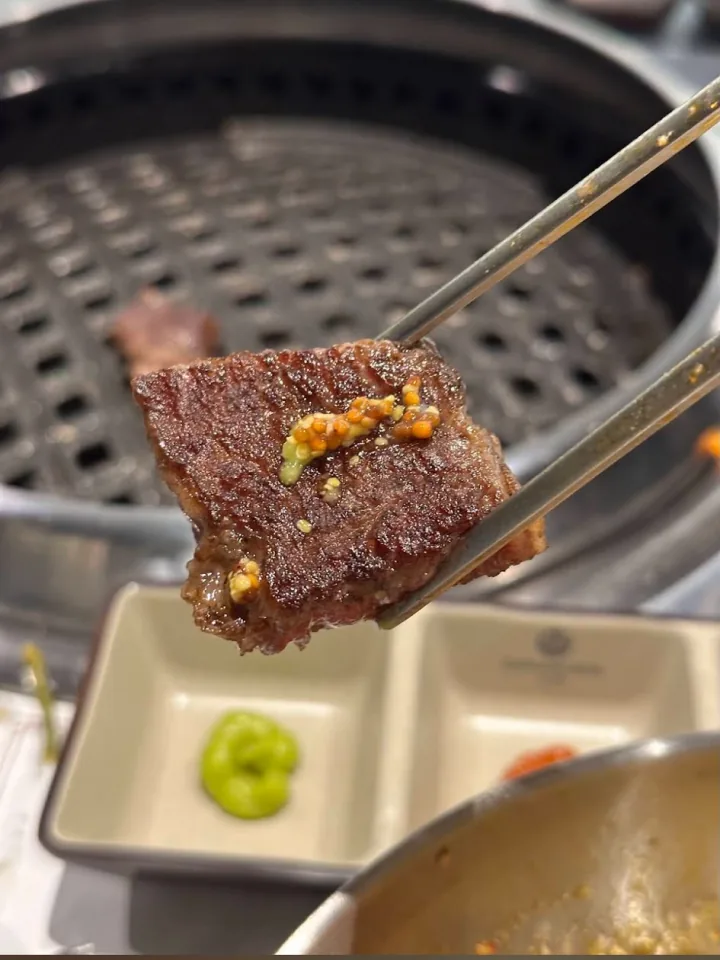
Marinated Hanwoo Ribeye, yangnyeom deungsim, and other thinner, seasoned cuts generally need somewhere under a minute per side. The sugars in the marinade caramelise quickly, so these cuts are also the ones most likely to catch and darken if left too long, especially over the hottest part of the fire, which makes them a good early test of how hot the grill actually is that evening.
Firmer, Working Muscles: A Short, Hot Sear Per Side
Cuts like ansangsal, outside skirt, and tosisal, hanging tender, sit in a middle zone. They're typically cut to a moderate thickness and benefit from a hot, relatively brief sear, roughly a minute or so per side depending on thickness, enough to firm the coarser grain without pushing the interior past tender. Neukgansal, rib fingers, and buchaesal, top blade, sit in a similar range, since both come from smaller, harder-working muscles that don't need long over the fire.
Thick Loin Cuts: Patience Pays Off
The thickest cuts on the table, Marbled Ribeye and Premium Marbled Ribeye, Striploin and Premium Striploin, and Tenderloin and Premium Tenderloin, need meaningfully longer, generally a few minutes per side depending on the exact thickness and grade, plus time resting at the edge of the grill rather than directly over the hottest coals for the whole cook. These cuts reward a slower approach: an initial hard sear, then a move to gentler heat to let the centre catch up without overcooking the surface a second time.
Salchisal and Similar Dense Cuts: Watch the Fat, Not the Clock
Chuck Flap Tail, salchisal, carries dense marbling in a relatively compact cut, and behaves closer to the thicker loin cuts than to the thin ones, needing a minute or two per side to let that marbling render properly without overcooking the surrounding muscle. Its smaller size makes it easy to underestimate, so it deserves the same close attention as a much bigger steak.
The One Rule That Applies to Everything
Regardless of the specific cut, the signal to watch is the meat itself rather than a fixed count. A cut is ready to flip once the underside has coloured and released slightly from the grate, and ready to come off once the surface has firmed while the centre still gives. Treating every cut on the table with the same timing is the surest way to overcook the thin ones and undercook the thick ones in the same sitting.
Every cut on GOSANCHON's menu is grilled with this range of timing in mind, tended course by course rather than left to a single setting. Private dining is a good way for a larger group to work through several cuts at an unhurried pace, with the timing handled at the table.