
The Beef
Korea's Cattle Traceability System, Explained
19 September 2026 · 3 min read
A number, not a promise
Anyone can print "100% Hanwoo" on a menu. What separates that claim from a verifiable fact is Korea's cattle traceability system, a mandatory national program that assigns every head of Hanwoo cattle a unique identification number at birth and follows that number through the animal's entire life, right through to slaughter and grading. It's an official record, not a marketing device, and it exists specifically because Hanwoo commands a premium price that would otherwise invite exactly the kind of substitution the system is built to prevent. Systems like this exist in various forms in beef industries elsewhere, but the tight link between an individual Hanwoo animal's number and its eventual grade is what makes Korea's version particularly useful for verifying a single, specific claim: that this cut, from this animal, really is Hanwoo.
How the system actually works
Each animal is tagged and registered soon after birth, and that identification number stays attached to it through every stage that follows: farm records, movement between locations if any occur, slaughter, and the official carcass grading that produces the familiar 1++ through 3 quality grade and A/B/C yield grade. Because the number is assigned to an individual animal rather than a batch or shipment, it allows a specific cut of meat to be traced back to a specific animal, a specific slaughter date, and a specific graded carcass, rather than a general claim about origin. That level of specificity is unusual by the standards of most food traceability schemes, which more commonly track a batch or a shipment date rather than a single named animal from birth onward.
What it actually lets a buyer verify
In Korea, this traceability number is often printed on retail packaging or displayed at the point of sale, letting a buyer look up the animal's birth date, breed confirmation, and grading result rather than taking a label's word for it. It's the mechanism that makes "genuine Hanwoo" a checkable fact instead of a description a seller chooses to use. For restaurants and butchers, it also means the supply chain has a paper trail at every step, from the farm to the carcass to the individual cut, which is much harder to fake than a certificate alone. It also means a problem, if one ever arose, could be traced back to its exact source rather than triggering a blanket recall across an entire region's supply, which is one of the quieter but more practical benefits of tracking at the level of the individual animal.
Why this matters more for Hanwoo than most beef
Because Hanwoo carries a significant price premium over commodity beef, and because so little of it is genuinely exported, the incentive to mislabel a cheaper or different beef as Hanwoo is real. A national, animal-level traceability system closes most of the gap that a simple country-of-origin label leaves open - it's much harder to fabricate an individual animal's full record than to print a country name on a package. That's a large part of why the traceability system exists in its current, quite granular form, rather than as a looser regional or brand-level guarantee.
What this means when you're eating it
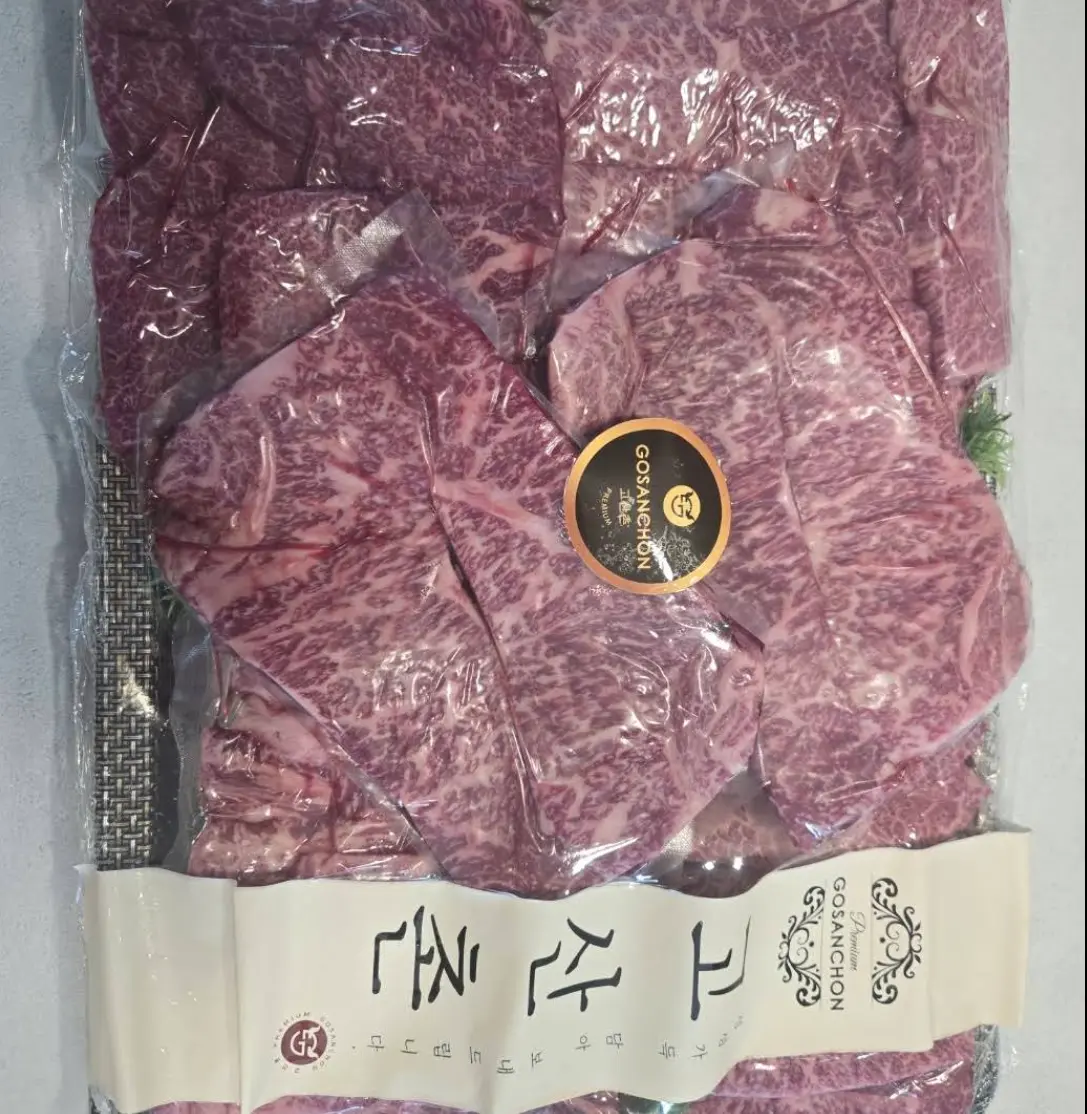
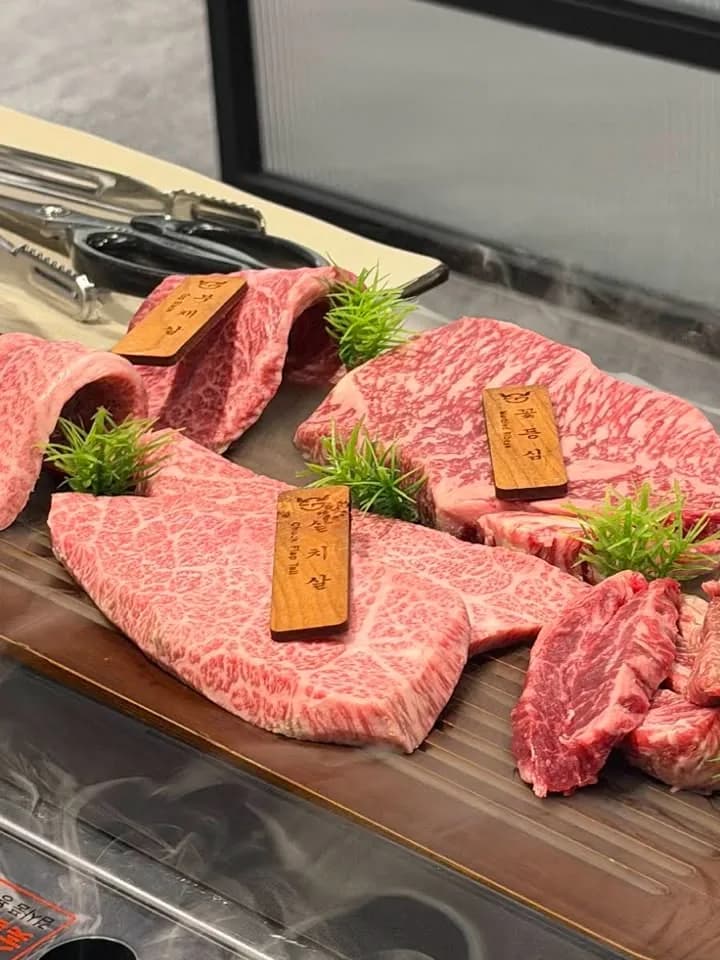
For a diner, the practical upshot is that genuine Hanwoo is a verifiable, documented product rather than a claim to take on faith, from the farm through to the grade on the carcass it came from. At GOSANCHON, that same seriousness about sourcing shows up in how the Hanwoo is handled once it arrives: displayed whole in a chilled cabinet and cut to order at the butcher's counter, so you can see the meat itself before it's cooked. The experience covers what that looks like from the moment you sit down.