
The Beef
Reading a Hanwoo Grade: What 1++ and A/B/C Mean
19 September 2026 · 3 min read
One grade, two different questions
A Hanwoo grade like "1++A" looks like a single rating, but it's actually the answer to two separate questions stacked together. The number and plus signs - 1++, 1+, 1, 2, or 3 - answer "how good is this meat to eat?" The letter that follows - A, B, or C - answers a completely different question: "how much usable meat did this carcass yield?" Confusing the two is the single most common mistake diners make when they see a grade on a menu or a butcher's display.
What the quality grade actually measures
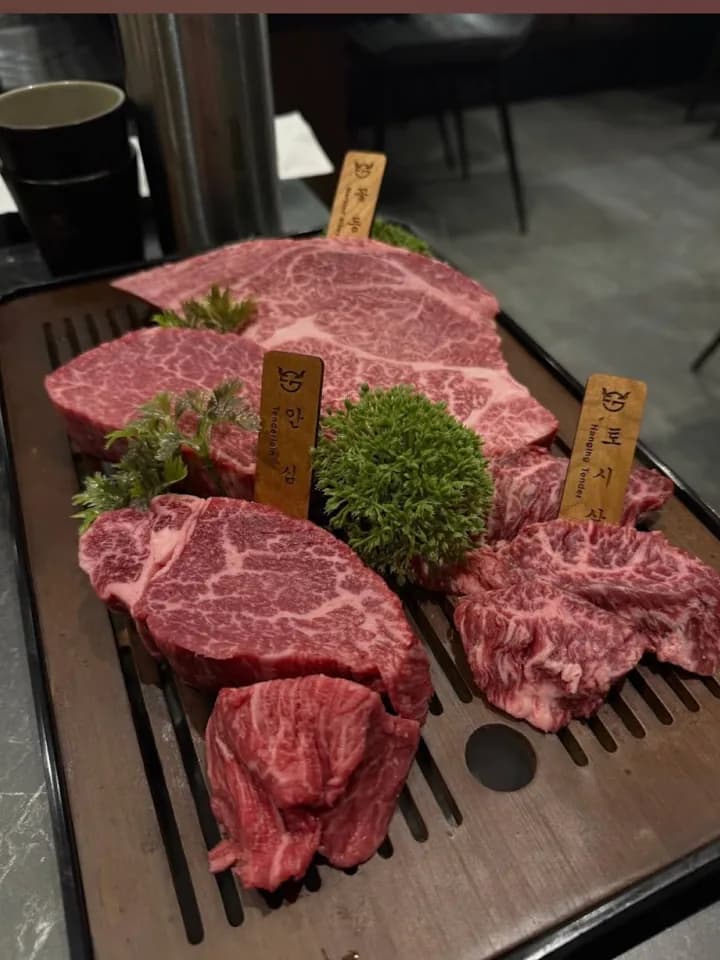
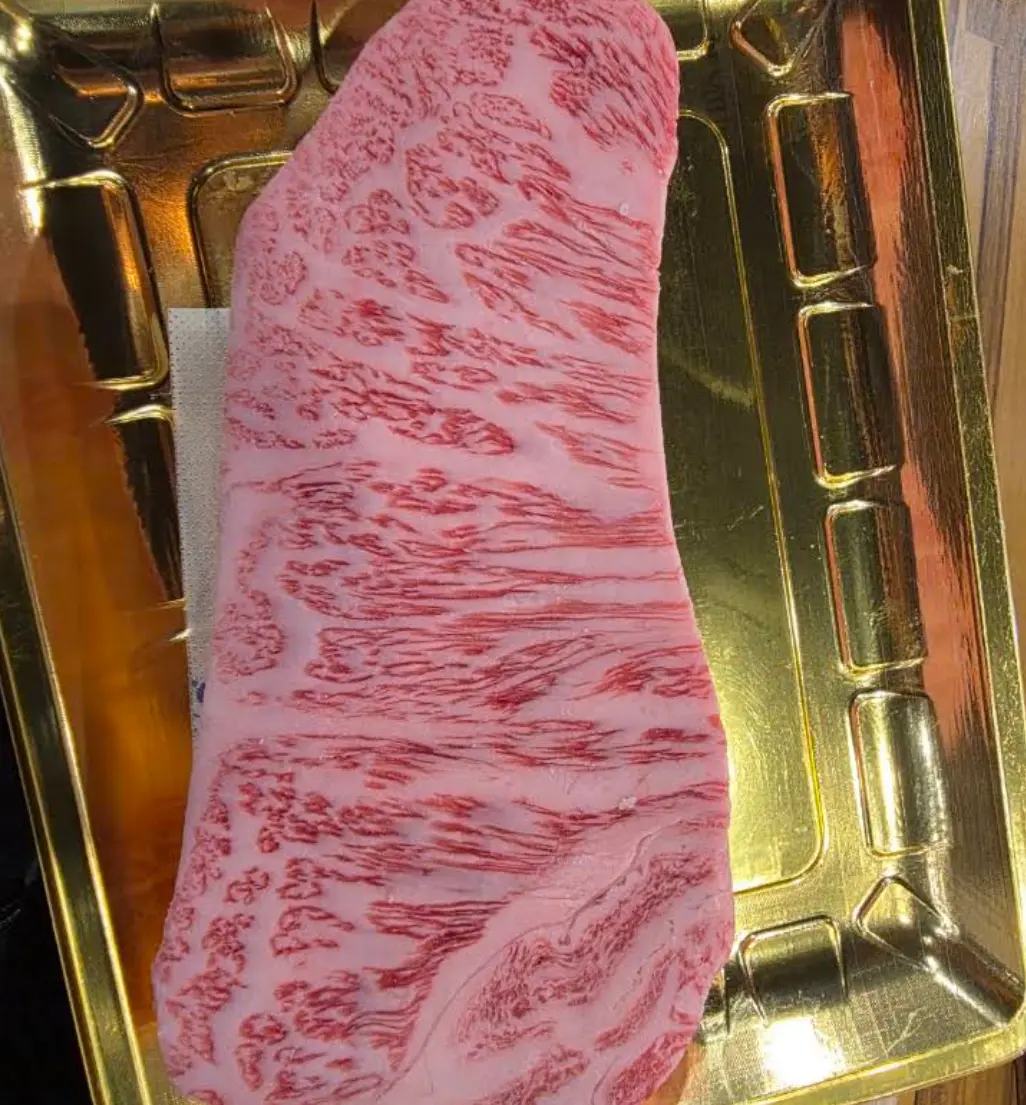
The quality grade, assessed by Korea's official carcass graders, is built from four criteria: marbling (how much and how finely the fat is distributed through the muscle), meat color, fat color, and the texture and firmness of the muscle itself. 1++ is the highest of the five quality grades, reserved for carcasses with the densest, most evenly distributed marbling and the cleanest color and texture scores. 1+ and 1 sit below it with progressively less marbling, and grades 2 and 3 describe leaner carcasses that are still entirely edible but lack the richness that "premium" Hanwoo is prized for. None of this is about the cut of meat - a 1++ carcass can still yield a lean cut like eye of round, and a lower-graded carcass can still produce a reasonably marbled ribeye, though the odds shift heavily with the overall grade. The grading itself is carried out visually and mechanically by trained inspectors working carcass by carcass shortly after slaughter, comparing a cross-section of the muscle against fixed reference standards rather than relying on a single automated measurement, which is part of why the process happens under a national inspection system rather than being left to individual sellers to assess.
What the yield grade is actually for
The A, B, C letter has nothing to do with taste. It's an efficiency measure calculated from the carcass's weight, back-fat thickness, and rib-eye area, and it tells a processor or wholesaler how much retail meat they can expect to cut from that particular animal relative to its size. A grade tells you the animal yielded generously; C tells you it yielded less. A restaurant or butcher cares about this figure for sourcing and cost reasons, but it says nothing about how the meat itself will taste or feel in the mouth. A 1++C carcass can still deliver superb eating quality; it simply produced less usable meat per kilogram of live weight. Because the two grades measure such different things, it's entirely possible for two carcasses from similarly sized animals to land on opposite ends of the yield scale while sharing an identical quality grade, which is exactly why the industry never collapses the two figures into one.
Reading it in practice
Put together, a grade like "1++A" tells you the meat is at the top of the quality scale and that the carcass yielded efficiently, while "1+B" tells you the meat is still excellent, one step down in marbling density, from a carcass with average yield. Neither letter changes the other. A high yield grade paired with a modest quality grade is still modest eating quality, and a top quality grade paired with a low yield grade is still top eating quality - it just cost the producer more per kilogram of finished retail cut. Menus and butcher displays don't always show both figures together, so it's worth asking for the full grade when it isn't printed - a seller confident in their sourcing will usually have it on hand.
What it means once it's on your table
Grading exists to give a Hanwoo carcass an objective, third-party score before it ever reaches a restaurant, which is part of what makes genuine Hanwoo traceable and verifiable rather than a marketing claim. At GOSANCHON, Hanwoo is displayed whole in a chilled cabinet and cut to order at the butcher's counter, so you can see the marbling the grade describes before it ever reaches the grill. The menu is a good place to see what that grading translates to, cut by cut.