
The Cuts
Galbi vs Galbisal: Bone-In Short Rib Versus the Boneless Meat
19 September 2026 · 3 min read
Galbi (갈비) and galbisal (갈비살) are easy to confuse because they come from the same part of the animal and share half a name, but they're genuinely different cuts to order and to eat. The distinction comes down to one word: sal (살) simply means "meat," and it's the difference between ordering the rib and ordering just the meat that runs along it.
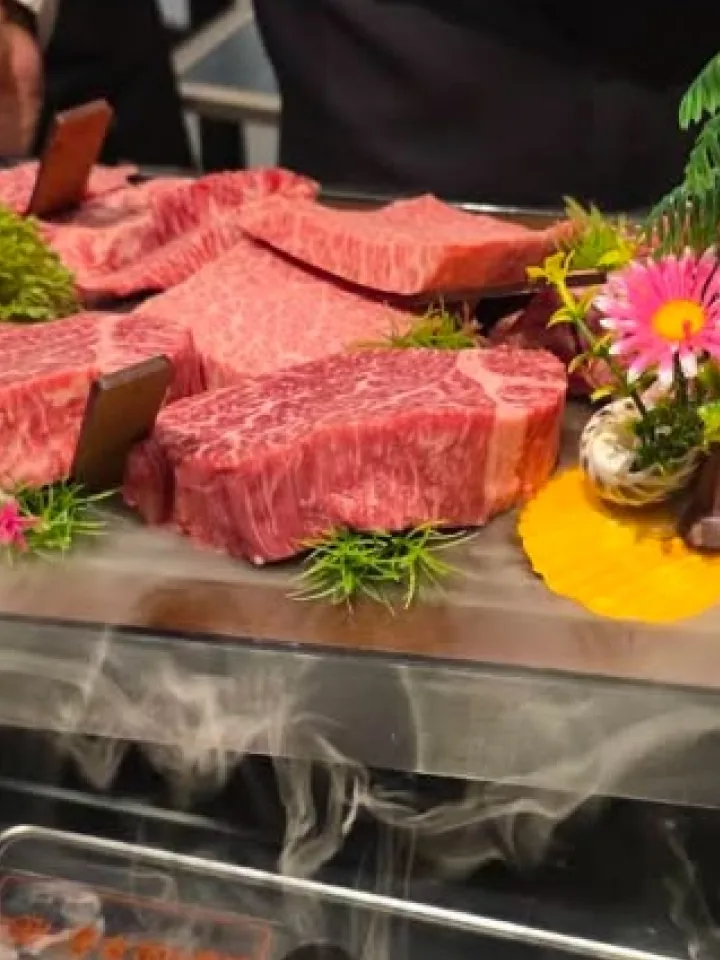
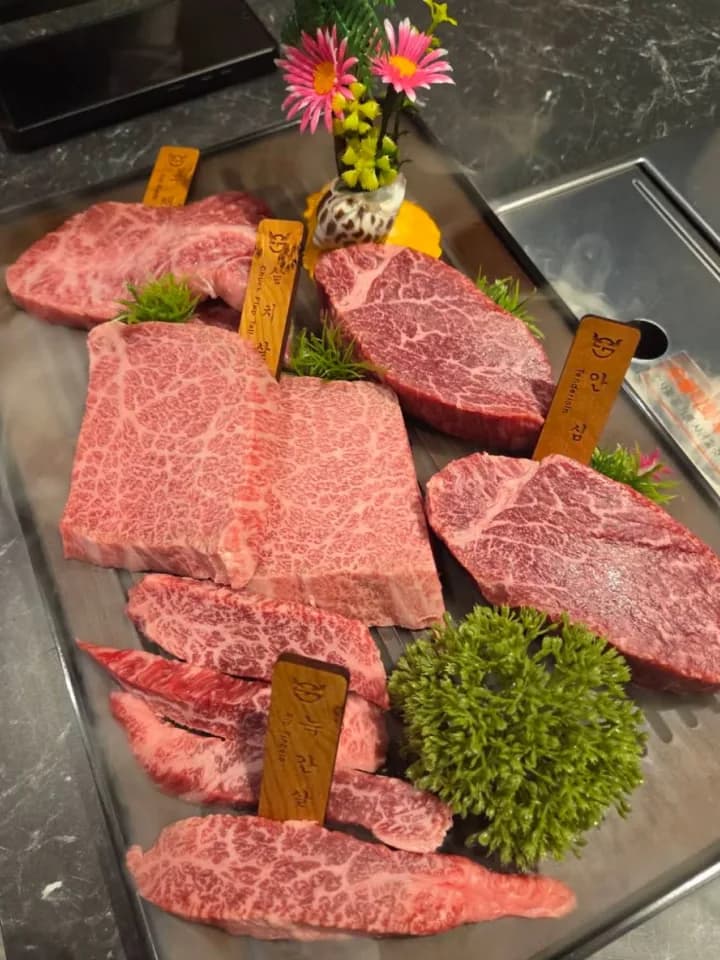
Same rib section, different cut
Galbi refers to the short rib as a whole: meat, connective tissue, and a cross-section of bone, taken from the lower rib area. Galbisal refers specifically to the strip of meat that runs along the rib bones, removed from the bone entirely before it's served. It's essentially the deboned version of the same region, which is why the two names get used loosely and sometimes interchangeably in casual conversation, even though they describe different final products.
What the bone changes
Cooking galbi on the bone means dealing with an uneven shape and a slower, gentler heat transfer near the bone itself, which protects the surrounding meat from overcooking while the exposed surface sears. It also means eating around a bone, which suits a slower, more social pace at the table. Galbisal, without the bone, cooks faster and more evenly, since heat reaches every surface of the meat at roughly the same rate. It's a more direct, no-obstacles way to eat the same region of the animal.
Texture and eating experience
Because galbisal is boneless, it's usually cut into a flatter, more even piece, which makes it easier to portion and eat quickly, closer in practice to how ribeye or striploin are served. Galbi keeps its shape around the bone and is often scored or butterflied to help it cook evenly, which gives it a slightly more textured, chewier bite in places, along with the flavour the bone itself contributes during grilling. Neither is more "premium" than the other by default. They're simply different ways of preparing meat from the same rib area, one built around convenience and even cooking, the other around the bone's contribution to moisture and flavour.
Which to order
If the appeal of Korean BBQ, for you, is bone-in cooking, the slower pace of working meat off a rib, and the flavour the bone adds, galbi is the more traditional choice. If you'd rather eat the same cut of meat without the bone getting in the way, cooked quickly and evenly, galbisal is the more straightforward order. Neither requires much beyond a hot grill and a light hand with seasoning to taste like what it is.
Where confusion usually comes from
Part of why the two names blur together in everyday conversation is that galbisal is, functionally, what's left once galbi has been boned out for easier eating. A restaurant might describe a dish as galbi when the bone is visibly part of the presentation, and as galbisal the moment that same general cut arrives already off the bone, sliced and ready to grill without any extra handling. Neither name is being used incorrectly in that scenario. They're simply describing two stages, or two styles, of preparing meat from the same rib region.
At the butcher's counter
Because both cuts come from the same rib section and portioning varies by animal, it's worth asking at the butcher's counter which is being cut that day. At GOSANCHON, Hanwoo is cut to order in full view of the table, so you can see exactly which cut, bone-in or boneless, you're getting before it reaches the charcoal. Read more about how that works during the experience.