
The Cuts
Why Korean BBQ Cuts Are Sliced Paper-Thin or Thick
19 September 2026 · 3 min read
Look down a Korean BBQ table and the range of thickness is one of the first things that stands out. Some cuts arrive shaved almost transparent. Others come as thick, steak-like portions that look closer to a Western grill than a Korean one. Neither choice is arbitrary. Thickness is a decision made about each specific cut, based on what that muscle is and what needs to happen to it over heat, and reading that decision correctly changes how you should treat each piece once it hits the grate.
Fat Content Decides the First Cut
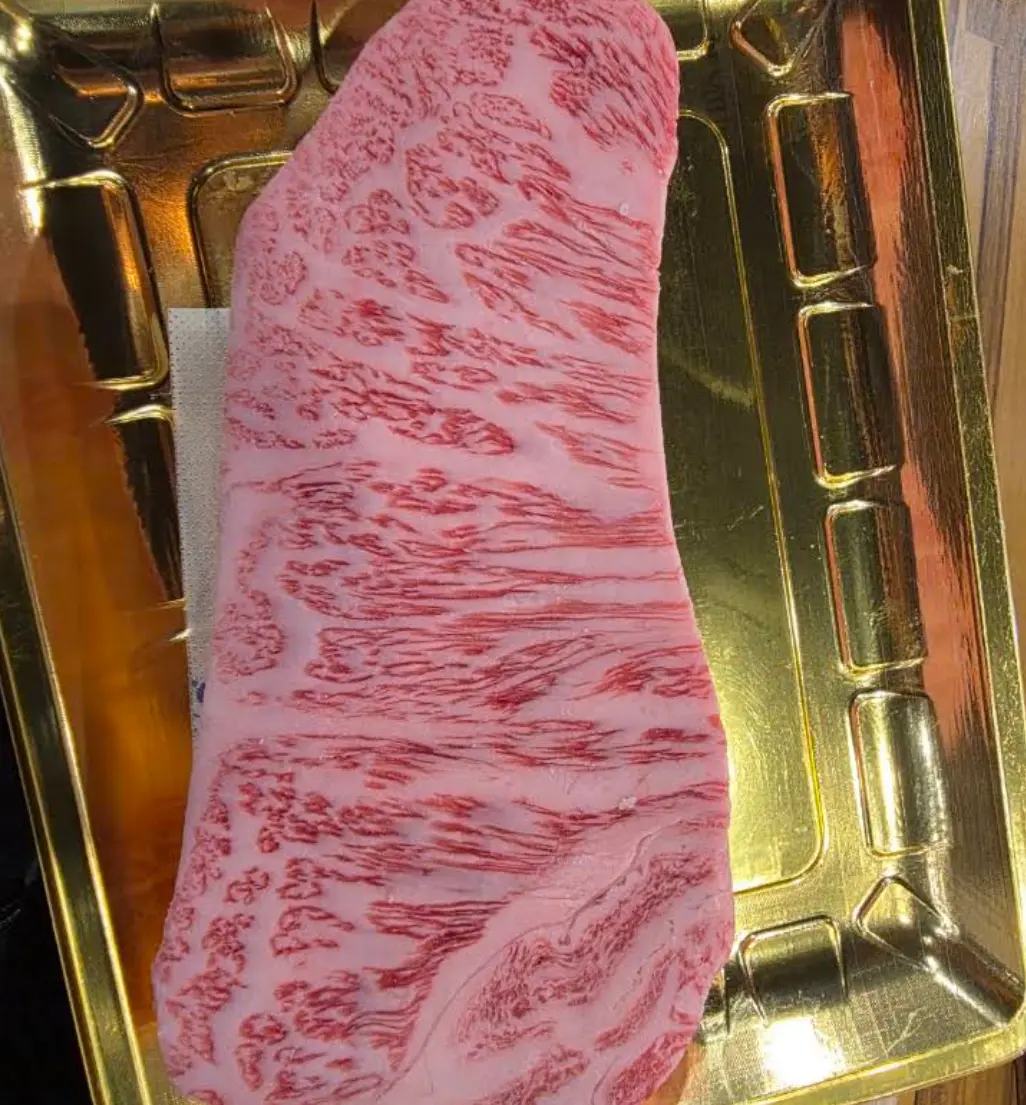
A muscle with a high proportion of fat woven through it, like the point of the brisket used for chadolbaegi, thinly sliced beef brisket, is sliced almost paper-thin on purpose. Over high heat, a thin slice lets that fat render almost instantly, basting the meat as it cooks, while the short cooking time keeps the lean parts from drying out before the fat has a chance to melt. Slice that same cut thick and the outside would dry out long before the fat inside had rendered, leaving a piece that is simultaneously tough on the surface and greasy in the centre.
Tenderness Decides the Thicker Cuts
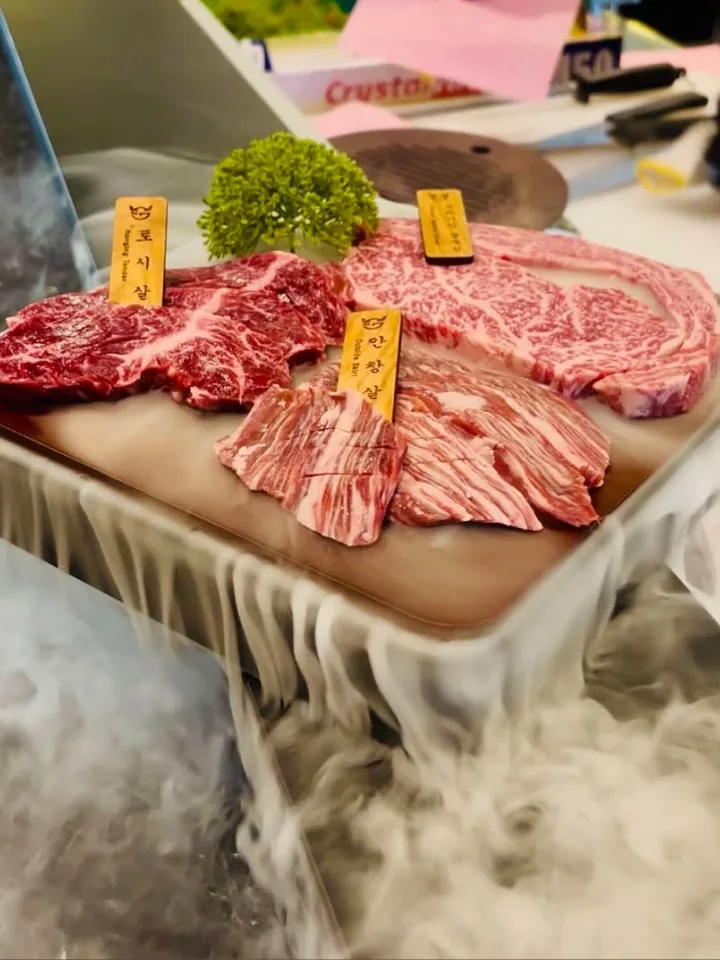
Muscles from the loin, deungsim, ribeye, and chaekkeut, striploin, are naturally tender and hold their structure well even at a generous thickness. Cutting them thin would rush past the very quality that makes them worth ordering: a slow, even sear that builds a real crust on the outside while the fine internal marbling has time to soften without cooking the centre grey. A thick cut also gives the grill something to work with, a searing zone and a resting edge, in a way a thin slice never allows, which is part of why these cuts are usually the ones served as standalone steaks rather than shared strips.
Firmer, Harder-Working Muscles Sit in Between
Cuts like ansangsal, outside skirt, and tosisal, hanging tender, come from muscles that worked constantly in the live animal and have a coarser, more open grain. These are usually cut to a moderate thickness, thinner than a ribeye but thicker than chadolbaegi, so a hot, fast sear firms the surface without the interior turning tough. Thickness here is doing double duty: thin enough to cook through quickly, thick enough to keep some bite and character on the way to the plate.
What This Means at the Grill
Thickness and grilling time are directly linked, and a good server or a well-tended table adjusts for both. A paper-thin slice needs seconds, not minutes, and should come off the grill the moment it changes colour. A thick loin cut needs patience, turned once, moved to a cooler part of the grill to finish rather than left directly over the hottest coals the whole time. Treating every cut the same way, regardless of thickness, is the fastest way to overcook the thin ones and undercook the thick ones in the same sitting, which is exactly the kind of mismatch a good grill station is built to avoid.
Reading the Table Like a Butcher Does
Once the logic is visible, thickness stops looking like a stylistic choice and starts reading as information: how much fat is in the cut, how hard the muscle worked, and how it wants to be cooked. Watching for that on the grill is one of the more useful habits a regular Korean BBQ diner can pick up, and it turns a table full of unfamiliar shapes into a fairly readable set of signals.
GOSANCHON's grill stations are tended with exactly this range in mind, from chadolbaegi's paper-thin slices to the thick-cut premium loin steaks. The experience covers how a table is guided through it course by course.