
The Cuts
A Map of the Korean Beef Carcass: Where Grilling Cuts Come From
19 September 2026 · 3 min read
A Korean BBQ menu can look like a long, unfamiliar list of names. It becomes much easier to navigate once you see where each cut actually sits on the animal, because location on the carcass, and how hard that particular muscle worked in life, is what determines texture, fat pattern, and how it should be grilled. Think of it less as a list to memorise and more as a map with a handful of clearly defined regions.
The Loin: The Restful Muscles
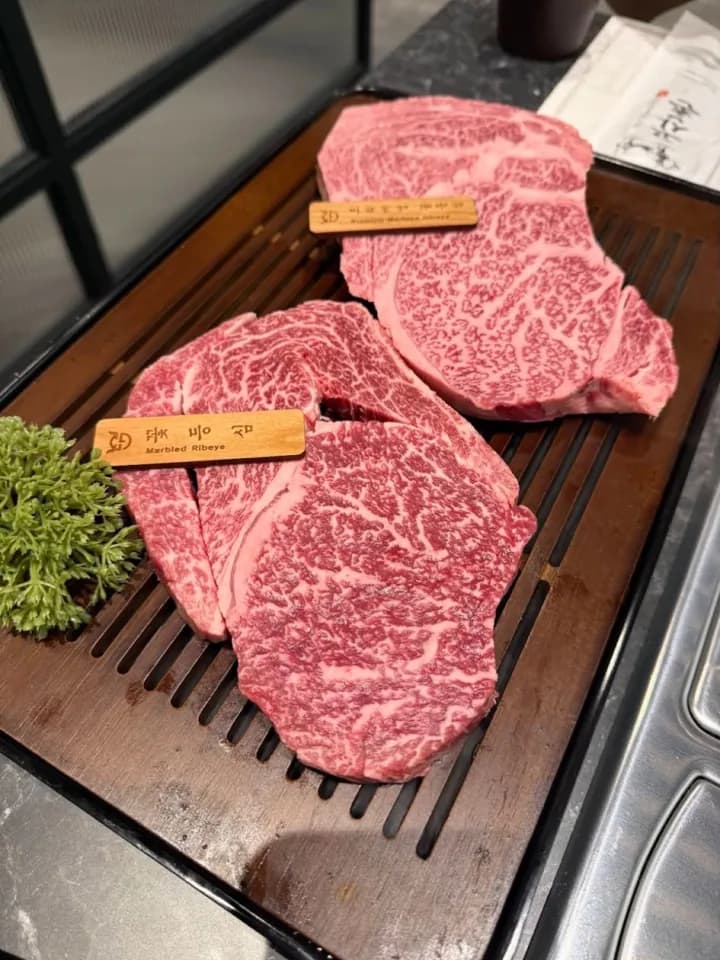
Running along the back, the loin does relatively little work supporting the animal's weight, which is why it produces the most tender, most evenly marbled cuts. Deungsim, the ribeye area, sits over the ribs and threads fat through the muscle in the fine web that gives marbled ribeye its name, kkotdeungsim, literally "flower loin." Just behind it, chaekkeut, striploin, is slightly leaner but shares the same tenderness. Further along, ansim, tenderloin, is the least-worked muscle on the entire animal, prized for its softness even though it carries less fat than ribeye or striploin. All three sit in roughly the same neighbourhood, which is part of why they are often grouped together on a menu.
The Chuck and Rib: Small, Hardworking Muscles
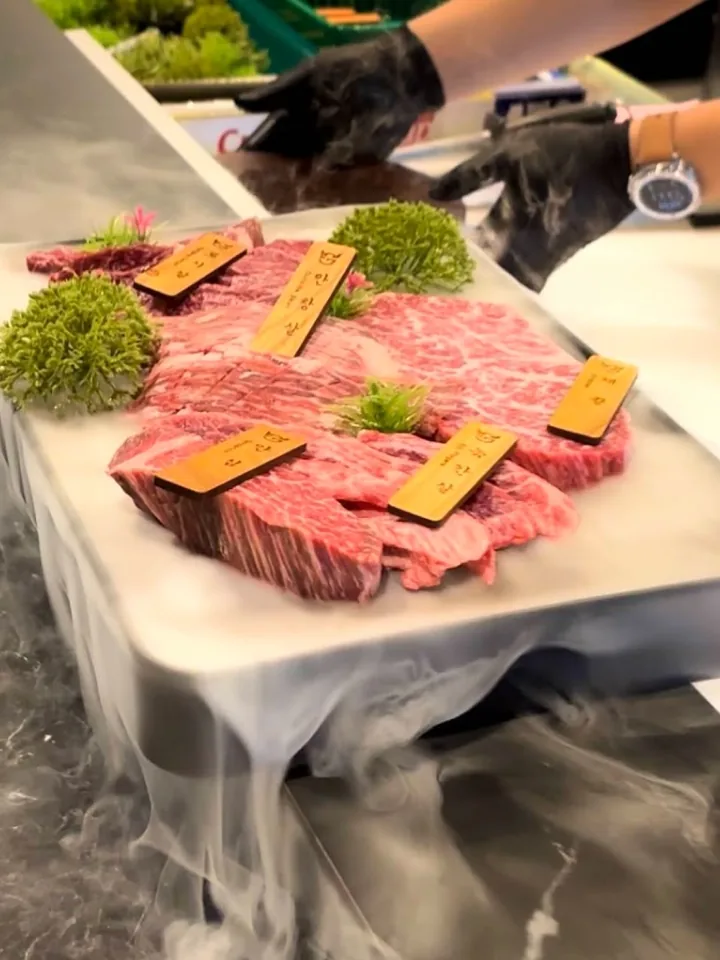
Moving toward the shoulder and rib cage, muscles do more work and come in smaller, more individual pieces. Salchisal, chuck flap tail, sits near the shoulder blade and is known for dense, fine marbling packed into a small cut. Buchaesal, top blade, is a flat, fan-shaped muscle from the same general area, prized for a slightly firmer bite with good fat distribution. Neukgansal, rib fingers, are the thin strips of meat that run between the rib bones, a cut with a naturally looser grain that grills quickly. Each of these comes from a muscle that supports movement rather than simply carrying weight, which is exactly why their texture reads differently from anything in the loin.
The Plate and Flank: Where Texture Gets Interesting
Lower down and toward the belly, muscles work harder and the texture changes accordingly. Ansangsal, outside skirt, and tosisal, hanging tender, both come from the diaphragm and plate area, muscles that are in near-constant motion and develop a deeper, more mineral flavour and a slightly coarser grain than loin cuts. Eopjinsal, brisket flank, comes from further along the belly, leaner and firmer, well suited to a shorter time over higher heat. These cuts are less about a smooth, buttery bite and more about a fuller, more direct beef flavour.
The Brisket Point: Built for Thin Slicing
Chadolbaegi, thinly sliced beef brisket, comes from the point of the brisket near the deckle, an area naturally rich in fat. Because the muscle itself is tougher than a loin cut, it is sliced paper-thin rather than served as a steak, which lets the fat render almost instantly over high heat while keeping the bite tender rather than chewy.
Why the Map Matters at the Table
Once the geography makes sense, a menu stops being a list of unfamiliar syllables and starts reading like a map of the animal, from the resting loin muscles to the hardworking plate and shoulder cuts. Ordering across that range, rather than sticking to one area, is the difference between tasting a single texture all night and tasting the whole animal, and it also makes it much easier to guess how an unfamiliar name on a future menu is likely to taste and cook.
To see where GOSANCHON's own selection sits on this map, from loin cuts to the diaphragm and shoulder pieces, the menu groups them by cut, grade, and portion.